
Closing out the last of the major PC-focused keynotes at Computex 2024 this evening, we have Intel. The long-reigning leader of the PC CPU market, Intel is in the middle of executing its plans to get back on track on both the manufacturing and chip design aspects of the business. Tonight’s keynote, being helmed by the highly-animated Pat Gelsinger, is titled “Bringing AI Everywhere.” And, like so many other Computex presentations and announcements this week, AI hardware is going to play a big part, as Intel outlines a full stack of products for client and server computing.
Of the four great PC chip vendors at the show, Intel has been the most up-front about what to expect from their hour-long presentation. The company’s Computex 2024 page already outlines their four major topics: AI PCs, Xeon 6 Processors, Gaudi AI accelerators, and Intel’s OpenVINO software ecosystem.
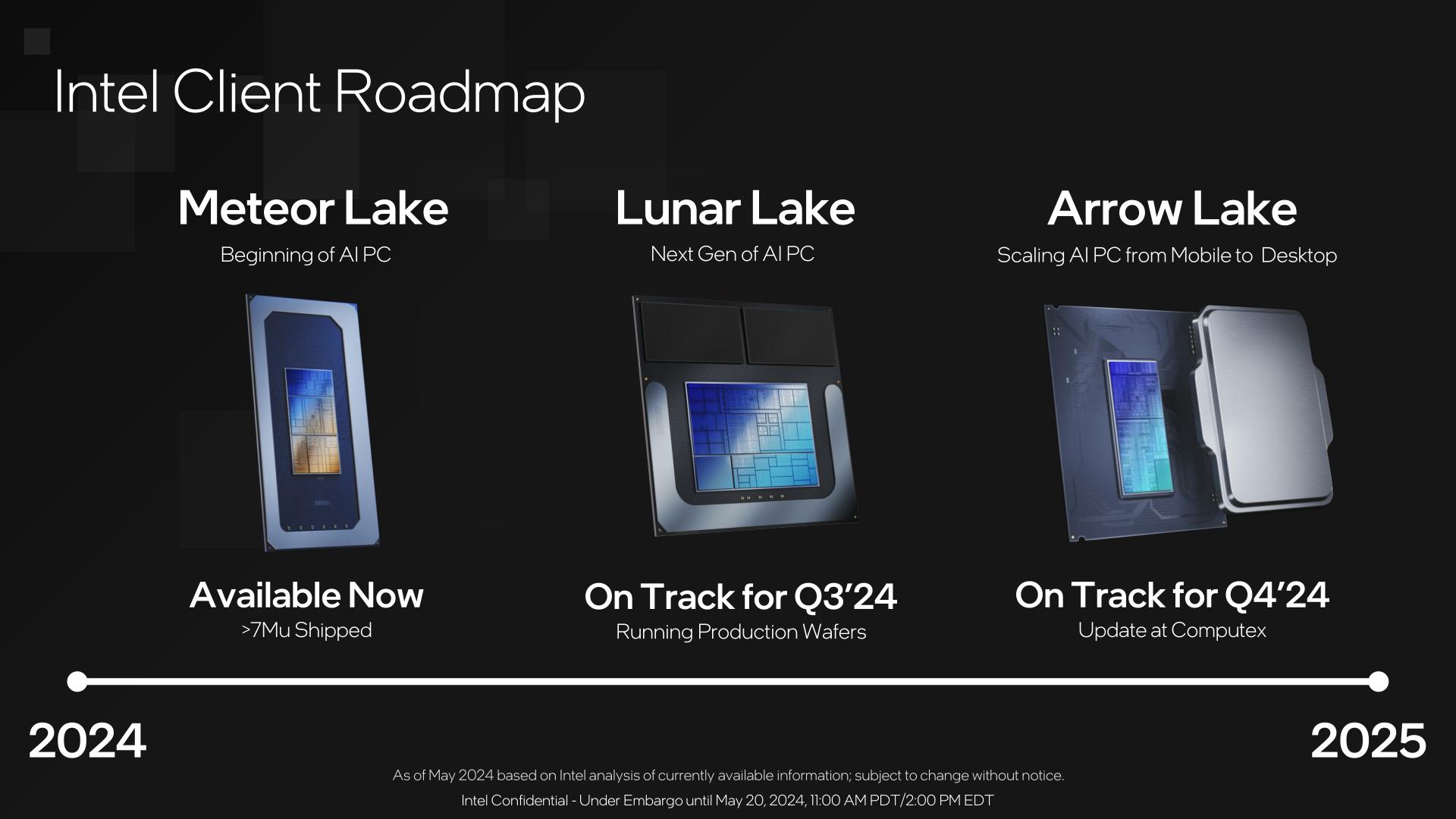
On the consumer hardware front, the company set the table with a significant teaser earlier this month about their forthcoming mobile PC SoC, Lunar Lake. The next generation of Core Ultra processors, Intel is touting significant energy efficiency gains for the mobile-focused chip, with new architectures driving their Performance and Efficiency CPU cores, Xe2 GPU, and a much faster 45+ TOPS (INT8) NPU. While the Lunar Lake announcement is coming relatively soon after the Meteor Lake launch, Intel has made it clear that it’s not going to hold back on shipping future products; they are looking to make up for lost time. Still, Lunar Lake devices are not expected to hit retail shelves until Q4 of this year, so this announcement is coming months in advance of the hardware itself.
On the server front, Intel has been publicly prepping for the launch of a new generation of Xeons with the Xeon 6 platform. The most notable part of this being the release of the company’s first Efficiency-core Xeon, Sierra Forest. Sierra Forest is set to be the first Xeon 6 chip out the door this year, and will offer up to 288 E cores on a single chip, allowing Intel to tap into the many (many) core CPU markets that AMD and Arm-based rivals have been unopposed at thus far.
Finally, the company has fully pivoted its server AI accelerator strategy to its Gaudi accelerators. Gaudi 3 was introduced back in April, and while it isn’t expected to go toe-to-toe with NVIDIA’s top accelerators in every workload, Intel is betting that they can beat NVIDIA on critical workloads, all while undercutting them significantly in pricing. The first Gaudi 3 parts are set to be released in the second half of this year, so hopefully we’ll be hearing a bit more about Intel’s plans as part of their keynote.
As always, the AnandTech crew is live and in person to catch this final Computex keynote. So please come join us at 8:00pm PT / 11:00pm ET / 03:00 UTC to get all the details.
Live Blog

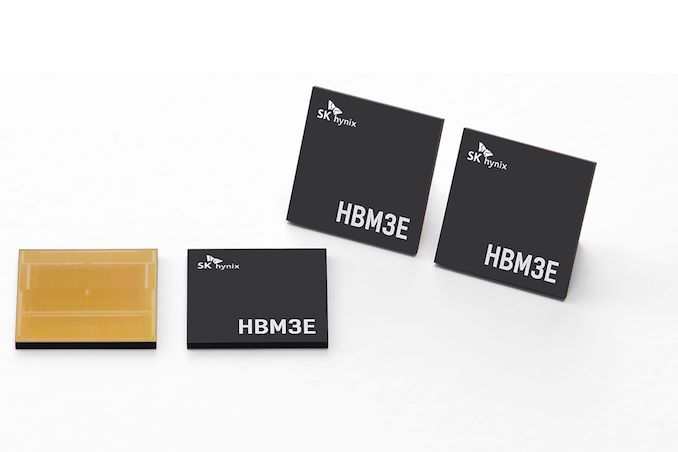
Demand for high-performance processors for AI training is skyrocketing, and consequently so is the demand for the components that go into these processors. So much so that SK hynix this week is very publicly announcing that the company's high-bandwidth memory (HBM) production capacity has already sold out for the rest of 2024, and even most of 2025 has already sold out as well.
SK hynix currently produces various types of HBM memory for customers like Amazon, AMD, Facebook, Google (Broadcom), Intel, Microsoft, and, of course, NVIDIA. The latter is an especially prolific consumer of HBM3 and HBM3E memory for its H100/H200/GH200 accelerators, as NVIDIA is also working to fill what remains an insatiable (and unmet) demand for its accelerators.
As a result, HBM memory orders, which are already placed months in advance, are now backlogging well into 2025 as chip vendors look to secure supplies of the memory stacks critical to their success.
This has made SK hynix the secnd HBM memory vendor in recent months to announce that they've sold out into 2025, following an earlier announcement from Micron regarding its HBM3E production. But of the two announcements, SK hynix's is arguably the most significant yet, as the South Korean firm's HBM production capacity is far greater than Micron's. So while things were merely "interesting" with the smallest of the Big Three memory manufacturers being sold out into 2025, things are taking a more concerning (and constrained) outlook now that SK hynix is as well.
SK hynix currently controls roughly 46% - 49% of HBM market, and its share is not expected to drop significantly in 2025, according to market tracking firm TrendForce. By contrast, Micron's share on HBM memory market is between 4% and 6%. Since HBM supply of both companies is sold out through the most of 2025, we're likely looking at a scenario where over 50% of the industry's total HBM3/HBM3E supply for the coming quarters is already sold out.
This leaves Samsung as the only member of the group not to comment on HBM demand so far. Though with memory being a highly fungible commodity product, it would be surprising if Samsung wasn't facing similar demand. And, ultimately, all of this is pointing towards the indusry entering an HBM3 memory shortage.
Separately, SK hynix said that it is sampling 12-Hi 36GB HBM3E stacks with customers and will begin volume shipments in the third quarter.
Memory
Demand for high-performance processors for AI training is skyrocketing, and consequently so is the demand for the components that go into these processors. So much so that SK hynix this week is very publicly announcing that the company's high-bandwidth memory (HBM) production capacity has already sold out for the rest of 2024, and even most of 2025 has already sold out as well.
SK hynix currently produces various types of HBM memory for customers like Amazon, AMD, Facebook, Google (Broadcom), Intel, Microsoft, and, of course, NVIDIA. The latter is an especially prolific consumer of HBM3 and HBM3E memory for its H100/H200/GH200 accelerators, as NVIDIA is also working to fill what remains an insatiable (and unmet) demand for its accelerators.
As a result, HBM memory orders, which are already placed months in advance, are now backlogging well into 2025 as chip vendors look to secure supplies of the memory stacks critical to their success.
This has made SK hynix the secnd HBM memory vendor in recent months to announce that they've sold out into 2025, following an earlier announcement from Micron regarding its HBM3E production. But of the two announcements, SK hynix's is arguably the most significant yet, as the South Korean firm's HBM production capacity is far greater than Micron's. So while things were merely "interesting" with the smallest of the Big Three memory manufacturers being sold out into 2025, things are taking a more concerning (and constrained) outlook now that SK hynix is as well.
SK hynix currently controls roughly 46% - 49% of HBM market, and its share is not expected to drop significantly in 2025, according to market tracking firm TrendForce. By contrast, Micron's share on HBM memory market is between 4% and 6%. Since HBM supply of both companies is sold out through the most of 2025, we're likely looking at a scenario where over 50% of the industry's total HBM3/HBM3E supply for the coming quarters is already sold out.
This leaves Samsung as the only member of the group not to comment on HBM demand so far. Though with memory being a highly fungible commodity product, it would be surprising if Samsung wasn't facing similar demand. And, ultimately, all of this is pointing towards the indusry entering an HBM3 memory shortage.
Separately, SK hynix said that it is sampling 12-Hi 36GB HBM3E stacks with customers and will begin volume shipments in the third quarter.
Memory
Lorem Ipsum is simply dummy text of the printing and typesetting industry. Lorem Ipsum has been the industry's.
Demand for high-performance processors for AI training is skyrocketing, and consequently so is the demand for the components that go into these processors. So much so that SK hynix this week is very publicly announcing that the company's high-bandwidth memory (HBM) production capacity has already sold out for the rest of 2024, and even most of 2025 has already sold out as well.
SK hynix currently produces various types of HBM memory for customers like Amazon, AMD, Facebook, Google (Broadcom), Intel, Microsoft, and, of course, NVIDIA. The latter is an especially prolific consumer of HBM3 and HBM3E memory for its H100/H200/GH200 accelerators, as NVIDIA is also working to fill what remains an insatiable (and unmet) demand for its accelerators.
As a result, HBM memory orders, which are already placed months in advance, are now backlogging well into 2025 as chip vendors look to secure supplies of the memory stacks critical to their success.
This has made SK hynix the secnd HBM memory vendor in recent months to announce that they've sold out into 2025, following an earlier announcement from Micron regarding its HBM3E production. But of the two announcements, SK hynix's is arguably the most significant yet, as the South Korean firm's HBM production capacity is far greater than Micron's. So while things were merely "interesting" with the smallest of the Big Three memory manufacturers being sold out into 2025, things are taking a more concerning (and constrained) outlook now that SK hynix is as well.
SK hynix currently controls roughly 46% - 49% of HBM market, and its share is not expected to drop significantly in 2025, according to market tracking firm TrendForce. By contrast, Micron's share on HBM memory market is between 4% and 6%. Since HBM supply of both companies is sold out through the most of 2025, we're likely looking at a scenario where over 50% of the industry's total HBM3/HBM3E supply for the coming quarters is already sold out.
This leaves Samsung as the only member of the group not to comment on HBM demand so far. Though with memory being a highly fungible commodity product, it would be surprising if Samsung wasn't facing similar demand. And, ultimately, all of this is pointing towards the indusry entering an HBM3 memory shortage.
Separately, SK hynix said that it is sampling 12-Hi 36GB HBM3E stacks with customers and will begin volume shipments in the third quarter.
Memory



 <p>Closing out the last of the major PC-focused keynotes at Computex 2024 this evening, we have Intel. The long-reigning leader of the PC CPU market, Intel is in the middle of executing its plans to get back on track on both the manufacturing and chip design aspects of the business. Tonight’s keynote, being helmed by the highly-animated Pat Gelsinger, is titled “Bringing AI Everywhere.” And, like so many other Computex presentations and announcements this week, AI hardware is going to play a big part, as Intel outlines a full stack of products for client and server computing.</p>
<p>Of the four great PC chip vendors at the show, Intel has been the most up-front about what to expect from their hour-long presentation. The company’s Computex 2024 page already outlines their four major topics: AI PCs, Xeon 6 Processors, Gaudi AI accelerators, and Intel’s OpenVINO software ecosystem.</p>
<p>On the consumer hardware front, the company set the table with a significant teaser earlier this month about their forthcoming mobile PC SoC, <a href="https://www.anandtech.com/show/21396/intel-teases-lunar-lake-ahead-of-computex-transformative-power-efficiency">Lunar Lake</a>. The next generation of Core Ultra processors, Intel is touting significant energy efficiency gains for the mobile-focused chip, with new architectures driving their Performance and Efficiency CPU cores, Xe2 GPU, and a much faster 45+ TOPS (INT8) NPU. While the Lunar Lake announcement is coming relatively soon after the Meteor Lake launch, Intel has made it clear that it’s not going to hold back on shipping future products; they are looking to make up for lost time. Still, Lunar Lake devices are not expected to hit retail shelves until Q4 of this year, so this announcement is coming months in advance of the hardware itself.</p>
<p align="center"><a href="https://www.anandtech.com/show/21427/the-intel-computex-2024-keynote-live-blog"><img alt="" src="https://images.anandtech.com/doci/21427/Intel%20Lunar%20Lake%20Preview_02.jpg" style="width: 100%;" /></a></p>
<p>On the server front, Intel has been publicly prepping for the launch of a new generation of Xeons with the <a href="https://www.anandtech.com/show/21339/intel-unveils-new-branding-for-6th-generation-xeon-processors-intel-xeon-6">Xeon 6 platform</a>. The most notable part of this being the release of the company’s first Efficiency-core Xeon, Sierra Forest. Sierra Forest is set to be the first Xeon 6 chip out the door this year, and will offer up to 288 E cores on a single chip, allowing Intel to tap into the many (many) core CPU markets that AMD and Arm-based rivals have been unopposed at thus far.</p>
<p>Finally, the company has fully pivoted its server AI accelerator strategy to its Gaudi accelerators. <a href="https://www.anandtech.com/show/21342/intel-introduces-gaudi-3-accelerator-going-bigger-and-aiming-higher">Gaudi 3 was introduced back in April</a>, and while it isn’t expected to go toe-to-toe with NVIDIA’s top accelerators in every workload, Intel is betting that they can beat NVIDIA on critical workloads, all while undercutting them significantly in pricing. The first Gaudi 3 parts are set to be released in the second half of this year, so hopefully we’ll be hearing a bit more about Intel’s plans as part of their keynote.</p>
<p>As always, the AnandTech crew is live and in person to catch this final Computex keynote. So please come join us at 8:00pm PT / 11:00pm ET / 03:00 UTC to get all the details.</p>
Live Blog)
 <p>Closing out the last of the major PC-focused keynotes at Computex 2024 this evening, we have Intel. The long-reigning leader of the PC CPU market, Intel is in the middle of executing its plans to get back on track on both the manufacturing and chip design aspects of the business. Tonight’s keynote, being helmed by the highly-animated Pat Gelsinger, is titled “Bringing AI Everywhere.” And, like so many other Computex presentations and announcements this week, AI hardware is going to play a big part, as Intel outlines a full stack of products for client and server computing.</p>
<p>Of the four great PC chip vendors at the show, Intel has been the most up-front about what to expect from their hour-long presentation. The company’s Computex 2024 page already outlines their four major topics: AI PCs, Xeon 6 Processors, Gaudi AI accelerators, and Intel’s OpenVINO software ecosystem.</p>
<p>On the consumer hardware front, the company set the table with a significant teaser earlier this month about their forthcoming mobile PC SoC, <a href="https://www.anandtech.com/show/21396/intel-teases-lunar-lake-ahead-of-computex-transformative-power-efficiency">Lunar Lake</a>. The next generation of Core Ultra processors, Intel is touting significant energy efficiency gains for the mobile-focused chip, with new architectures driving their Performance and Efficiency CPU cores, Xe2 GPU, and a much faster 45+ TOPS (INT8) NPU. While the Lunar Lake announcement is coming relatively soon after the Meteor Lake launch, Intel has made it clear that it’s not going to hold back on shipping future products; they are looking to make up for lost time. Still, Lunar Lake devices are not expected to hit retail shelves until Q4 of this year, so this announcement is coming months in advance of the hardware itself.</p>
<p align="center"><a href="https://www.anandtech.com/show/21427/the-intel-computex-2024-keynote-live-blog"><img alt="" src="https://images.anandtech.com/doci/21427/Intel%20Lunar%20Lake%20Preview_02.jpg" style="width: 100%;" /></a></p>
<p>On the server front, Intel has been publicly prepping for the launch of a new generation of Xeons with the <a href="https://www.anandtech.com/show/21339/intel-unveils-new-branding-for-6th-generation-xeon-processors-intel-xeon-6">Xeon 6 platform</a>. The most notable part of this being the release of the company’s first Efficiency-core Xeon, Sierra Forest. Sierra Forest is set to be the first Xeon 6 chip out the door this year, and will offer up to 288 E cores on a single chip, allowing Intel to tap into the many (many) core CPU markets that AMD and Arm-based rivals have been unopposed at thus far.</p>
<p>Finally, the company has fully pivoted its server AI accelerator strategy to its Gaudi accelerators. <a href="https://www.anandtech.com/show/21342/intel-introduces-gaudi-3-accelerator-going-bigger-and-aiming-higher">Gaudi 3 was introduced back in April</a>, and while it isn’t expected to go toe-to-toe with NVIDIA’s top accelerators in every workload, Intel is betting that they can beat NVIDIA on critical workloads, all while undercutting them significantly in pricing. The first Gaudi 3 parts are set to be released in the second half of this year, so hopefully we’ll be hearing a bit more about Intel’s plans as part of their keynote.</p>
<p>As always, the AnandTech crew is live and in person to catch this final Computex keynote. So please come join us at 8:00pm PT / 11:00pm ET / 03:00 UTC to get all the details.</p>
Live Blog)
 <p>Closing out the last of the major PC-focused keynotes at Computex 2024 this evening, we have Intel. The long-reigning leader of the PC CPU market, Intel is in the middle of executing its plans to get back on track on both the manufacturing and chip design aspects of the business. Tonight’s keynote, being helmed by the highly-animated Pat Gelsinger, is titled “Bringing AI Everywhere.” And, like so many other Computex presentations and announcements this week, AI hardware is going to play a big part, as Intel outlines a full stack of products for client and server computing.</p>
<p>Of the four great PC chip vendors at the show, Intel has been the most up-front about what to expect from their hour-long presentation. The company’s Computex 2024 page already outlines their four major topics: AI PCs, Xeon 6 Processors, Gaudi AI accelerators, and Intel’s OpenVINO software ecosystem.</p>
<p>On the consumer hardware front, the company set the table with a significant teaser earlier this month about their forthcoming mobile PC SoC, <a href="https://www.anandtech.com/show/21396/intel-teases-lunar-lake-ahead-of-computex-transformative-power-efficiency">Lunar Lake</a>. The next generation of Core Ultra processors, Intel is touting significant energy efficiency gains for the mobile-focused chip, with new architectures driving their Performance and Efficiency CPU cores, Xe2 GPU, and a much faster 45+ TOPS (INT8) NPU. While the Lunar Lake announcement is coming relatively soon after the Meteor Lake launch, Intel has made it clear that it’s not going to hold back on shipping future products; they are looking to make up for lost time. Still, Lunar Lake devices are not expected to hit retail shelves until Q4 of this year, so this announcement is coming months in advance of the hardware itself.</p>
<p align="center"><a href="https://www.anandtech.com/show/21427/the-intel-computex-2024-keynote-live-blog"><img alt="" src="https://images.anandtech.com/doci/21427/Intel%20Lunar%20Lake%20Preview_02.jpg" style="width: 100%;" /></a></p>
<p>On the server front, Intel has been publicly prepping for the launch of a new generation of Xeons with the <a href="https://www.anandtech.com/show/21339/intel-unveils-new-branding-for-6th-generation-xeon-processors-intel-xeon-6">Xeon 6 platform</a>. The most notable part of this being the release of the company’s first Efficiency-core Xeon, Sierra Forest. Sierra Forest is set to be the first Xeon 6 chip out the door this year, and will offer up to 288 E cores on a single chip, allowing Intel to tap into the many (many) core CPU markets that AMD and Arm-based rivals have been unopposed at thus far.</p>
<p>Finally, the company has fully pivoted its server AI accelerator strategy to its Gaudi accelerators. <a href="https://www.anandtech.com/show/21342/intel-introduces-gaudi-3-accelerator-going-bigger-and-aiming-higher">Gaudi 3 was introduced back in April</a>, and while it isn’t expected to go toe-to-toe with NVIDIA’s top accelerators in every workload, Intel is betting that they can beat NVIDIA on critical workloads, all while undercutting them significantly in pricing. The first Gaudi 3 parts are set to be released in the second half of this year, so hopefully we’ll be hearing a bit more about Intel’s plans as part of their keynote.</p>
<p>As always, the AnandTech crew is live and in person to catch this final Computex keynote. So please come join us at 8:00pm PT / 11:00pm ET / 03:00 UTC to get all the details.</p>
Live Blog | https://compbuddey.blogspot.com/2024/06/the-intel-computex-2024-keynote-live_16.html)
 <p>Closing out the last of the major PC-focused keynotes at Computex 2024 this evening, we have Intel. The long-reigning leader of the PC CPU market, Intel is in the middle of executing its plans to get back on track on both the manufacturing and chip design aspects of the business. Tonight’s keynote, being helmed by the highly-animated Pat Gelsinger, is titled “Bringing AI Everywhere.” And, like so many other Computex presentations and announcements this week, AI hardware is going to play a big part, as Intel outlines a full stack of products for client and server computing.</p>
<p>Of the four great PC chip vendors at the show, Intel has been the most up-front about what to expect from their hour-long presentation. The company’s Computex 2024 page already outlines their four major topics: AI PCs, Xeon 6 Processors, Gaudi AI accelerators, and Intel’s OpenVINO software ecosystem.</p>
<p>On the consumer hardware front, the company set the table with a significant teaser earlier this month about their forthcoming mobile PC SoC, <a href="https://www.anandtech.com/show/21396/intel-teases-lunar-lake-ahead-of-computex-transformative-power-efficiency">Lunar Lake</a>. The next generation of Core Ultra processors, Intel is touting significant energy efficiency gains for the mobile-focused chip, with new architectures driving their Performance and Efficiency CPU cores, Xe2 GPU, and a much faster 45+ TOPS (INT8) NPU. While the Lunar Lake announcement is coming relatively soon after the Meteor Lake launch, Intel has made it clear that it’s not going to hold back on shipping future products; they are looking to make up for lost time. Still, Lunar Lake devices are not expected to hit retail shelves until Q4 of this year, so this announcement is coming months in advance of the hardware itself.</p>
<p align="center"><a href="https://www.anandtech.com/show/21427/the-intel-computex-2024-keynote-live-blog"><img alt="" src="https://images.anandtech.com/doci/21427/Intel%20Lunar%20Lake%20Preview_02.jpg" style="width: 100%;" /></a></p>
<p>On the server front, Intel has been publicly prepping for the launch of a new generation of Xeons with the <a href="https://www.anandtech.com/show/21339/intel-unveils-new-branding-for-6th-generation-xeon-processors-intel-xeon-6">Xeon 6 platform</a>. The most notable part of this being the release of the company’s first Efficiency-core Xeon, Sierra Forest. Sierra Forest is set to be the first Xeon 6 chip out the door this year, and will offer up to 288 E cores on a single chip, allowing Intel to tap into the many (many) core CPU markets that AMD and Arm-based rivals have been unopposed at thus far.</p>
<p>Finally, the company has fully pivoted its server AI accelerator strategy to its Gaudi accelerators. <a href="https://www.anandtech.com/show/21342/intel-introduces-gaudi-3-accelerator-going-bigger-and-aiming-higher">Gaudi 3 was introduced back in April</a>, and while it isn’t expected to go toe-to-toe with NVIDIA’s top accelerators in every workload, Intel is betting that they can beat NVIDIA on critical workloads, all while undercutting them significantly in pricing. The first Gaudi 3 parts are set to be released in the second half of this year, so hopefully we’ll be hearing a bit more about Intel’s plans as part of their keynote.</p>
<p>As always, the AnandTech crew is live and in person to catch this final Computex keynote. So please come join us at 8:00pm PT / 11:00pm ET / 03:00 UTC to get all the details.</p>
Live Blog&body=https://compbuddey.blogspot.com/2024/06/the-intel-computex-2024-keynote-live_16.html)


0 Comments