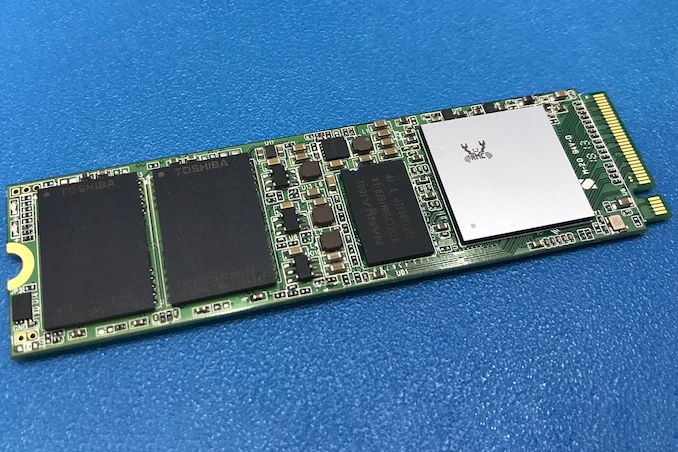

While Realtek is best known in the enthusiast space for for its peripheral controllers such as audio codecs and network controllers, the company also has a small-but-respectable SSD controller business that tends to fly under the radar due to its focus on entry-level and mainstream drives. But Realtek's stature in the SSD space is on the rise, as the company is not only planning new PCIe Gen5 SSD controllers, but also their first high-end, DRAM-equipped SSD controller.
For this year's Computex trade show, Realtek laid out a new SSD controller roadmap that calls for the company to release a trio of new SSD controllers over the next couple of years. First up is a new four-channel entry-level PCIe 4.0 controller, the RTS5776DL, which will be joined a bit later by a PCIe 5.0 variant, the RTS5781DL. But most interesting on Realtek's new roadmap is the final chip being planned: the eight-channel, DRAM-equipped RTS5782, which would be the company's first high-end SSD controller, capable of hitting sequential read rates as high as 14GB/second.
| Realtek NVMe SSD Controller Comparison | |||||||||
| RTS5782 | RTS5781DL | RTS5776DL | RTS5772DL | RTS5766DL | |||||
| Market Segment | High-End | Mainstream | Entry-Level | ||||||
| Error Correction | 4K LDPC | 2K LDPC | |||||||
| DRAM | DDR4, LPDDR4(X) | No | No | No | No | ||||
| Host Interface | PCIe 5.0 x4 | PCIe 5.0 x4 | PCIe 4.0 x4 | PCIe 4.0 x4 | PCIe 3.0 x4 | ||||
| NVMe Version | NVMe 2.0 | NVMe 2.0 | NVMe 2.0 | NVMe 1.4 | NVMe 1.4 | ||||
| NAND Channels, Interface Speed | 8 ch, 3600 MT/s |
4 ch, 3600 MT/s |
4 ch, 3600 MT/s |
8 ch, 1600 MT/s |
4 ch, 1200 MT/s |
||||
| Sequential Read | 14 GB/s | 10 GB/s | 7.4 GB/s | 6 GB/s | 3.2 GB/s | ||||
| Sequential Write | 12 GB/s | 10 GB/s | 7.4 GB/s | 6 GB/s | 2.2 GB/s | ||||
| 4KB Random Read IOPS | 2500k | 1400k | 1200k | - | - | ||||
| 4KB Random Write IOPS | 2500k | 1400k | 1200k | - | - | ||||
Diving a bit deeper into Realtek's roadmap, the RTS5776DL is traditional DRAM-less PCIe Gen4 x4 controller with four NAND chann... SSDs


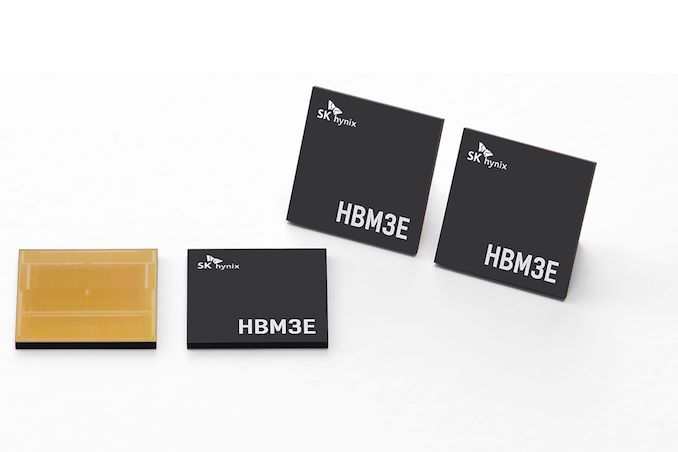
Demand for high-performance processors for AI training is skyrocketing, and consequently so is the demand for the components that go into these processors. So much so that SK hynix this week is very publicly announcing that the company's high-bandwidth memory (HBM) production capacity has already sold out for the rest of 2024, and even most of 2025 has already sold out as well.
SK hynix currently produces various types of HBM memory for customers like Amazon, AMD, Facebook, Google (Broadcom), Intel, Microsoft, and, of course, NVIDIA. The latter is an especially prolific consumer of HBM3 and HBM3E memory for its H100/H200/GH200 accelerators, as NVIDIA is also working to fill what remains an insatiable (and unmet) demand for its accelerators.
As a result, HBM memory orders, which are already placed months in advance, are now backlogging well into 2025 as chip vendors look to secure supplies of the memory stacks critical to their success.
This has made SK hynix the secnd HBM memory vendor in recent months to announce that they've sold out into 2025, following an earlier announcement from Micron regarding its HBM3E production. But of the two announcements, SK hynix's is arguably the most significant yet, as the South Korean firm's HBM production capacity is far greater than Micron's. So while things were merely "interesting" with the smallest of the Big Three memory manufacturers being sold out into 2025, things are taking a more concerning (and constrained) outlook now that SK hynix is as well.
SK hynix currently controls roughly 46% - 49% of HBM market, and its share is not expected to drop significantly in 2025, according to market tracking firm TrendForce. By contrast, Micron's share on HBM memory market is between 4% and 6%. Since HBM supply of both companies is sold out through the most of 2025, we're likely looking at a scenario where over 50% of the industry's total HBM3/HBM3E supply for the coming quarters is already sold out.
This leaves Samsung as the only member of the group not to comment on HBM demand so far. Though with memory being a highly fungible commodity product, it would be surprising if Samsung wasn't facing similar demand. And, ultimately, all of this is pointing towards the indusry entering an HBM3 memory shortage.
Separately, SK hynix said that it is sampling 12-Hi 36GB HBM3E stacks with customers and will begin volume shipments in the third quarter.
Memory
Demand for high-performance processors for AI training is skyrocketing, and consequently so is the demand for the components that go into these processors. So much so that SK hynix this week is very publicly announcing that the company's high-bandwidth memory (HBM) production capacity has already sold out for the rest of 2024, and even most of 2025 has already sold out as well.
SK hynix currently produces various types of HBM memory for customers like Amazon, AMD, Facebook, Google (Broadcom), Intel, Microsoft, and, of course, NVIDIA. The latter is an especially prolific consumer of HBM3 and HBM3E memory for its H100/H200/GH200 accelerators, as NVIDIA is also working to fill what remains an insatiable (and unmet) demand for its accelerators.
As a result, HBM memory orders, which are already placed months in advance, are now backlogging well into 2025 as chip vendors look to secure supplies of the memory stacks critical to their success.
This has made SK hynix the secnd HBM memory vendor in recent months to announce that they've sold out into 2025, following an earlier announcement from Micron regarding its HBM3E production. But of the two announcements, SK hynix's is arguably the most significant yet, as the South Korean firm's HBM production capacity is far greater than Micron's. So while things were merely "interesting" with the smallest of the Big Three memory manufacturers being sold out into 2025, things are taking a more concerning (and constrained) outlook now that SK hynix is as well.
SK hynix currently controls roughly 46% - 49% of HBM market, and its share is not expected to drop significantly in 2025, according to market tracking firm TrendForce. By contrast, Micron's share on HBM memory market is between 4% and 6%. Since HBM supply of both companies is sold out through the most of 2025, we're likely looking at a scenario where over 50% of the industry's total HBM3/HBM3E supply for the coming quarters is already sold out.
This leaves Samsung as the only member of the group not to comment on HBM demand so far. Though with memory being a highly fungible commodity product, it would be surprising if Samsung wasn't facing similar demand. And, ultimately, all of this is pointing towards the indusry entering an HBM3 memory shortage.
Separately, SK hynix said that it is sampling 12-Hi 36GB HBM3E stacks with customers and will begin volume shipments in the third quarter.
Memory
Lorem Ipsum is simply dummy text of the printing and typesetting industry. Lorem Ipsum has been the industry's.
Demand for high-performance processors for AI training is skyrocketing, and consequently so is the demand for the components that go into these processors. So much so that SK hynix this week is very publicly announcing that the company's high-bandwidth memory (HBM) production capacity has already sold out for the rest of 2024, and even most of 2025 has already sold out as well.
SK hynix currently produces various types of HBM memory for customers like Amazon, AMD, Facebook, Google (Broadcom), Intel, Microsoft, and, of course, NVIDIA. The latter is an especially prolific consumer of HBM3 and HBM3E memory for its H100/H200/GH200 accelerators, as NVIDIA is also working to fill what remains an insatiable (and unmet) demand for its accelerators.
As a result, HBM memory orders, which are already placed months in advance, are now backlogging well into 2025 as chip vendors look to secure supplies of the memory stacks critical to their success.
This has made SK hynix the secnd HBM memory vendor in recent months to announce that they've sold out into 2025, following an earlier announcement from Micron regarding its HBM3E production. But of the two announcements, SK hynix's is arguably the most significant yet, as the South Korean firm's HBM production capacity is far greater than Micron's. So while things were merely "interesting" with the smallest of the Big Three memory manufacturers being sold out into 2025, things are taking a more concerning (and constrained) outlook now that SK hynix is as well.
SK hynix currently controls roughly 46% - 49% of HBM market, and its share is not expected to drop significantly in 2025, according to market tracking firm TrendForce. By contrast, Micron's share on HBM memory market is between 4% and 6%. Since HBM supply of both companies is sold out through the most of 2025, we're likely looking at a scenario where over 50% of the industry's total HBM3/HBM3E supply for the coming quarters is already sold out.
This leaves Samsung as the only member of the group not to comment on HBM demand so far. Though with memory being a highly fungible commodity product, it would be surprising if Samsung wasn't facing similar demand. And, ultimately, all of this is pointing towards the indusry entering an HBM3 memory shortage.
Separately, SK hynix said that it is sampling 12-Hi 36GB HBM3E stacks with customers and will begin volume shipments in the third quarter.
Memory



</td>
<td rowspan="1" style="text-align: center;">No</td>
<td rowspan="1" style="text-align: center;">No</td>
<td rowspan="1" style="text-align: center;">No</td>
<td rowspan="1" style="text-align: center;">No</td>
</tr>
<tr>
<td class="tlgrey">Host Interface</td>
<td style="text-align: center;">PCIe 5.0 x4</td>
<td style="text-align: center;">PCIe 5.0 x4</td>
<td style="text-align: center;">PCIe 4.0 x4</td>
<td rowspan="1" style="text-align: center;">PCIe 4.0 x4</td>
<td rowspan="1" style="text-align: center;">PCIe 3.0 x4</td>
</tr>
<tr>
<td class="tlgrey">NVMe Version</td>
<td style="text-align: center;">NVMe 2.0</td>
<td style="text-align: center;">NVMe 2.0</td>
<td style="text-align: center;">NVMe 2.0</td>
<td style="text-align: center;">NVMe 1.4</td>
<td style="text-align: center;">NVMe 1.4</td>
</tr>
<tr>
<td class="tlgrey" rowspan="1">NAND Channels, Interface Speed</td>
<td rowspan="1" style="text-align: center;">8 ch,<br />
3600 MT/s</td>
<td rowspan="1" style="text-align: center;">4 ch,<br />
3600 MT/s</td>
<td rowspan="1" style="text-align: center;">4 ch,<br />
3600 MT/s</td>
<td rowspan="1" style="text-align: center;">8 ch,<br />
1600 MT/s</td>
<td rowspan="1" style="text-align: center;">4 ch,<br />
1200 MT/s</td>
</tr>
<tr>
<td class="tlgrey">Sequential Read</td>
<td style="text-align: center;">14 GB/s</td>
<td style="text-align: center;">10 GB/s</td>
<td style="text-align: center;">7.4 GB/s</td>
<td style="text-align: center;">6 GB/s</td>
<td style="text-align: center;">3.2 GB/s</td>
</tr>
<tr>
<td class="tlgrey">Sequential Write</td>
<td style="text-align: center;">12 GB/s</td>
<td style="text-align: center;">10 GB/s</td>
<td style="text-align: center;">7.4 GB/s</td>
<td style="text-align: center;">6 GB/s</td>
<td style="text-align: center;">2.2 GB/s</td>
</tr>
<tr>
<td class="tlgrey">4KB Random Read IOPS</td>
<td style="text-align: center;">2500k</td>
<td style="text-align: center;">1400k</td>
<td style="text-align: center;">1200k</td>
<td style="text-align: center;">-</td>
<td style="text-align: center;">-</td>
</tr>
<tr>
<td class="tlgrey">4KB Random Write IOPS</td>
<td style="text-align: center;">2500k</td>
<td style="text-align: center;">1400k</td>
<td style="text-align: center;">1200k</td>
<td style="text-align: center;">-</td>
<td style="text-align: center;">-</td>
</tr>
</tbody>
</table>
<p>Diving a bit deeper into Realtek's roadmap, the RTS5776DL is traditional DRAM-less PCIe Gen4 x4 controller with four NAND chann... SSDs)
</td>
<td rowspan="1" style="text-align: center;">No</td>
<td rowspan="1" style="text-align: center;">No</td>
<td rowspan="1" style="text-align: center;">No</td>
<td rowspan="1" style="text-align: center;">No</td>
</tr>
<tr>
<td class="tlgrey">Host Interface</td>
<td style="text-align: center;">PCIe 5.0 x4</td>
<td style="text-align: center;">PCIe 5.0 x4</td>
<td style="text-align: center;">PCIe 4.0 x4</td>
<td rowspan="1" style="text-align: center;">PCIe 4.0 x4</td>
<td rowspan="1" style="text-align: center;">PCIe 3.0 x4</td>
</tr>
<tr>
<td class="tlgrey">NVMe Version</td>
<td style="text-align: center;">NVMe 2.0</td>
<td style="text-align: center;">NVMe 2.0</td>
<td style="text-align: center;">NVMe 2.0</td>
<td style="text-align: center;">NVMe 1.4</td>
<td style="text-align: center;">NVMe 1.4</td>
</tr>
<tr>
<td class="tlgrey" rowspan="1">NAND Channels, Interface Speed</td>
<td rowspan="1" style="text-align: center;">8 ch,<br />
3600 MT/s</td>
<td rowspan="1" style="text-align: center;">4 ch,<br />
3600 MT/s</td>
<td rowspan="1" style="text-align: center;">4 ch,<br />
3600 MT/s</td>
<td rowspan="1" style="text-align: center;">8 ch,<br />
1600 MT/s</td>
<td rowspan="1" style="text-align: center;">4 ch,<br />
1200 MT/s</td>
</tr>
<tr>
<td class="tlgrey">Sequential Read</td>
<td style="text-align: center;">14 GB/s</td>
<td style="text-align: center;">10 GB/s</td>
<td style="text-align: center;">7.4 GB/s</td>
<td style="text-align: center;">6 GB/s</td>
<td style="text-align: center;">3.2 GB/s</td>
</tr>
<tr>
<td class="tlgrey">Sequential Write</td>
<td style="text-align: center;">12 GB/s</td>
<td style="text-align: center;">10 GB/s</td>
<td style="text-align: center;">7.4 GB/s</td>
<td style="text-align: center;">6 GB/s</td>
<td style="text-align: center;">2.2 GB/s</td>
</tr>
<tr>
<td class="tlgrey">4KB Random Read IOPS</td>
<td style="text-align: center;">2500k</td>
<td style="text-align: center;">1400k</td>
<td style="text-align: center;">1200k</td>
<td style="text-align: center;">-</td>
<td style="text-align: center;">-</td>
</tr>
<tr>
<td class="tlgrey">4KB Random Write IOPS</td>
<td style="text-align: center;">2500k</td>
<td style="text-align: center;">1400k</td>
<td style="text-align: center;">1200k</td>
<td style="text-align: center;">-</td>
<td style="text-align: center;">-</td>
</tr>
</tbody>
</table>
<p>Diving a bit deeper into Realtek's roadmap, the RTS5776DL is traditional DRAM-less PCIe Gen4 x4 controller with four NAND chann... SSDs)
</td>
<td rowspan="1" style="text-align: center;">No</td>
<td rowspan="1" style="text-align: center;">No</td>
<td rowspan="1" style="text-align: center;">No</td>
<td rowspan="1" style="text-align: center;">No</td>
</tr>
<tr>
<td class="tlgrey">Host Interface</td>
<td style="text-align: center;">PCIe 5.0 x4</td>
<td style="text-align: center;">PCIe 5.0 x4</td>
<td style="text-align: center;">PCIe 4.0 x4</td>
<td rowspan="1" style="text-align: center;">PCIe 4.0 x4</td>
<td rowspan="1" style="text-align: center;">PCIe 3.0 x4</td>
</tr>
<tr>
<td class="tlgrey">NVMe Version</td>
<td style="text-align: center;">NVMe 2.0</td>
<td style="text-align: center;">NVMe 2.0</td>
<td style="text-align: center;">NVMe 2.0</td>
<td style="text-align: center;">NVMe 1.4</td>
<td style="text-align: center;">NVMe 1.4</td>
</tr>
<tr>
<td class="tlgrey" rowspan="1">NAND Channels, Interface Speed</td>
<td rowspan="1" style="text-align: center;">8 ch,<br />
3600 MT/s</td>
<td rowspan="1" style="text-align: center;">4 ch,<br />
3600 MT/s</td>
<td rowspan="1" style="text-align: center;">4 ch,<br />
3600 MT/s</td>
<td rowspan="1" style="text-align: center;">8 ch,<br />
1600 MT/s</td>
<td rowspan="1" style="text-align: center;">4 ch,<br />
1200 MT/s</td>
</tr>
<tr>
<td class="tlgrey">Sequential Read</td>
<td style="text-align: center;">14 GB/s</td>
<td style="text-align: center;">10 GB/s</td>
<td style="text-align: center;">7.4 GB/s</td>
<td style="text-align: center;">6 GB/s</td>
<td style="text-align: center;">3.2 GB/s</td>
</tr>
<tr>
<td class="tlgrey">Sequential Write</td>
<td style="text-align: center;">12 GB/s</td>
<td style="text-align: center;">10 GB/s</td>
<td style="text-align: center;">7.4 GB/s</td>
<td style="text-align: center;">6 GB/s</td>
<td style="text-align: center;">2.2 GB/s</td>
</tr>
<tr>
<td class="tlgrey">4KB Random Read IOPS</td>
<td style="text-align: center;">2500k</td>
<td style="text-align: center;">1400k</td>
<td style="text-align: center;">1200k</td>
<td style="text-align: center;">-</td>
<td style="text-align: center;">-</td>
</tr>
<tr>
<td class="tlgrey">4KB Random Write IOPS</td>
<td style="text-align: center;">2500k</td>
<td style="text-align: center;">1400k</td>
<td style="text-align: center;">1200k</td>
<td style="text-align: center;">-</td>
<td style="text-align: center;">-</td>
</tr>
</tbody>
</table>
<p>Diving a bit deeper into Realtek's roadmap, the RTS5776DL is traditional DRAM-less PCIe Gen4 x4 controller with four NAND chann... SSDs | https://compbuddey.blogspot.com/2024/06/realtek-outlines-ssd-controller-roadmap_16.html)
</td>
<td rowspan="1" style="text-align: center;">No</td>
<td rowspan="1" style="text-align: center;">No</td>
<td rowspan="1" style="text-align: center;">No</td>
<td rowspan="1" style="text-align: center;">No</td>
</tr>
<tr>
<td class="tlgrey">Host Interface</td>
<td style="text-align: center;">PCIe 5.0 x4</td>
<td style="text-align: center;">PCIe 5.0 x4</td>
<td style="text-align: center;">PCIe 4.0 x4</td>
<td rowspan="1" style="text-align: center;">PCIe 4.0 x4</td>
<td rowspan="1" style="text-align: center;">PCIe 3.0 x4</td>
</tr>
<tr>
<td class="tlgrey">NVMe Version</td>
<td style="text-align: center;">NVMe 2.0</td>
<td style="text-align: center;">NVMe 2.0</td>
<td style="text-align: center;">NVMe 2.0</td>
<td style="text-align: center;">NVMe 1.4</td>
<td style="text-align: center;">NVMe 1.4</td>
</tr>
<tr>
<td class="tlgrey" rowspan="1">NAND Channels, Interface Speed</td>
<td rowspan="1" style="text-align: center;">8 ch,<br />
3600 MT/s</td>
<td rowspan="1" style="text-align: center;">4 ch,<br />
3600 MT/s</td>
<td rowspan="1" style="text-align: center;">4 ch,<br />
3600 MT/s</td>
<td rowspan="1" style="text-align: center;">8 ch,<br />
1600 MT/s</td>
<td rowspan="1" style="text-align: center;">4 ch,<br />
1200 MT/s</td>
</tr>
<tr>
<td class="tlgrey">Sequential Read</td>
<td style="text-align: center;">14 GB/s</td>
<td style="text-align: center;">10 GB/s</td>
<td style="text-align: center;">7.4 GB/s</td>
<td style="text-align: center;">6 GB/s</td>
<td style="text-align: center;">3.2 GB/s</td>
</tr>
<tr>
<td class="tlgrey">Sequential Write</td>
<td style="text-align: center;">12 GB/s</td>
<td style="text-align: center;">10 GB/s</td>
<td style="text-align: center;">7.4 GB/s</td>
<td style="text-align: center;">6 GB/s</td>
<td style="text-align: center;">2.2 GB/s</td>
</tr>
<tr>
<td class="tlgrey">4KB Random Read IOPS</td>
<td style="text-align: center;">2500k</td>
<td style="text-align: center;">1400k</td>
<td style="text-align: center;">1200k</td>
<td style="text-align: center;">-</td>
<td style="text-align: center;">-</td>
</tr>
<tr>
<td class="tlgrey">4KB Random Write IOPS</td>
<td style="text-align: center;">2500k</td>
<td style="text-align: center;">1400k</td>
<td style="text-align: center;">1200k</td>
<td style="text-align: center;">-</td>
<td style="text-align: center;">-</td>
</tr>
</tbody>
</table>
<p>Diving a bit deeper into Realtek's roadmap, the RTS5776DL is traditional DRAM-less PCIe Gen4 x4 controller with four NAND chann... SSDs&body=https://compbuddey.blogspot.com/2024/06/realtek-outlines-ssd-controller-roadmap_16.html)


0 Comments