

One of Qualcomm's indisputable strengths are its 5G modems – something which even Apple has yet to successfully ween itself from. And while Qualcomm is not integrating a modem into its first-generation Oryon-based Snapdragon X chips, the company is still looking to leverage that technology advantage via discrete modems that can be installed in Snapdragon X laptops.
To date, Qualcomm has won 23 laptop designs with its Snapdragon X Elite SoCs, and all of the leading PC vendors have introduced systems based on Qualcomm's Snapdragon X Elite processors. However, only some of them will be equipped with modems, the company detailed at Computex 2024.
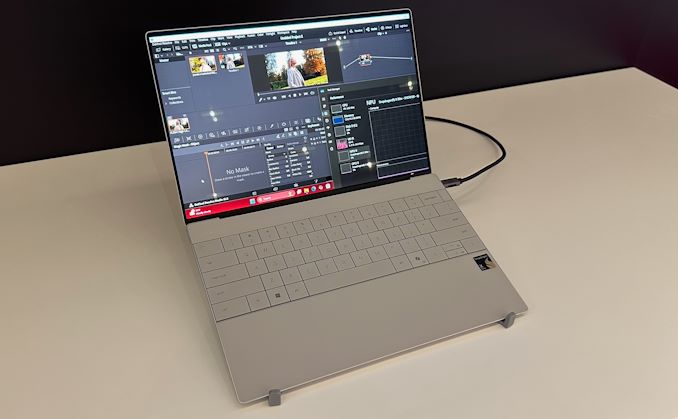
While the technical rationale for this is very straightforward (not every vendor wants to buy and dedicate the space to modems), it's still a bit of a surprise in as much as Qualcomm has traditionally heavily pushed laptop vendors to include their modems. But as the Snapdragon X has entered the picture, the joint Qualcomm/Microsoft always connected PC (ACPC) initiative is taking a back seat – meaning modems are no longer being pushed nearly as hard. In its place, the two companies have pivoted hard to equipping mainstream systems with the hardware needed for local AI processing (i.e. NPUs), and with it, Microsoft's Copilot+ PC branding.
Laptop manufacturers, in the meantime, are breathing a sigh of relief, as this switch to emphasizing AI comes at a much lower hardware cost, since vendors don't need to buy additional discrete hardware. Qualcomm for its part has never fully disclosed the full cost of including a Snapdragon modem with a laptop, but the total cost adds up quickly. Besides buying a discrete modem, device manufacturers also need to buy and integrate a 5G-capable radio frequency front end module (RF FEM), as well as the all-important antenna. And mmWave support of any kind can add another wrinkle, as multiple antennas at different orientations are needed to get the best results.
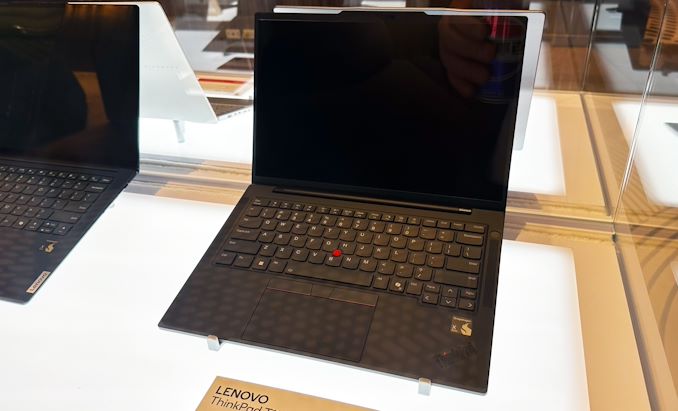
And while not said out-loud, Qualcomm's premium positioning strategy for 8cx-based laptops has not paid significant dividends. Snapdragon X laptops are being priced much more competitively, as Qualcomm is aiming to capture a meaningful share of the PC market – and high-cost features like modems would drive up the final price tag.
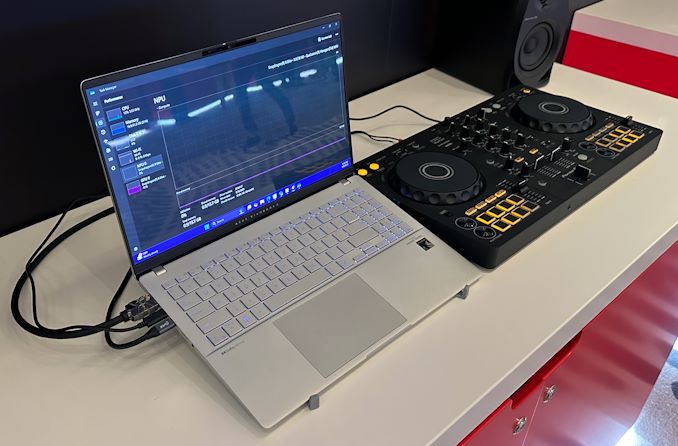
Still, virtually all Qualcomm representatives I talked to at Computex were happy to argue that an integrated modem is a huge benefit for their PCs, as they can get fast connectivity almost everywhere in the world instantly and not depend on Wi-Fi or even their smartphones. So the dream of widespread 5G-capable laptops is not dead at Qualcomm; it may just be delayed. In the meantime, for laptop buyers that do need or want a 5G modem, there will still be at least a few premium laptop models on store shelves with the necessary hardware.
Notebooks

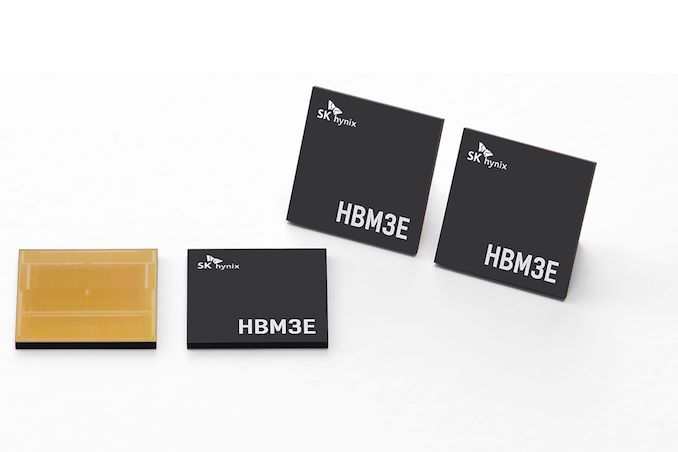
Demand for high-performance processors for AI training is skyrocketing, and consequently so is the demand for the components that go into these processors. So much so that SK hynix this week is very publicly announcing that the company's high-bandwidth memory (HBM) production capacity has already sold out for the rest of 2024, and even most of 2025 has already sold out as well.
SK hynix currently produces various types of HBM memory for customers like Amazon, AMD, Facebook, Google (Broadcom), Intel, Microsoft, and, of course, NVIDIA. The latter is an especially prolific consumer of HBM3 and HBM3E memory for its H100/H200/GH200 accelerators, as NVIDIA is also working to fill what remains an insatiable (and unmet) demand for its accelerators.
As a result, HBM memory orders, which are already placed months in advance, are now backlogging well into 2025 as chip vendors look to secure supplies of the memory stacks critical to their success.
This has made SK hynix the secnd HBM memory vendor in recent months to announce that they've sold out into 2025, following an earlier announcement from Micron regarding its HBM3E production. But of the two announcements, SK hynix's is arguably the most significant yet, as the South Korean firm's HBM production capacity is far greater than Micron's. So while things were merely "interesting" with the smallest of the Big Three memory manufacturers being sold out into 2025, things are taking a more concerning (and constrained) outlook now that SK hynix is as well.
SK hynix currently controls roughly 46% - 49% of HBM market, and its share is not expected to drop significantly in 2025, according to market tracking firm TrendForce. By contrast, Micron's share on HBM memory market is between 4% and 6%. Since HBM supply of both companies is sold out through the most of 2025, we're likely looking at a scenario where over 50% of the industry's total HBM3/HBM3E supply for the coming quarters is already sold out.
This leaves Samsung as the only member of the group not to comment on HBM demand so far. Though with memory being a highly fungible commodity product, it would be surprising if Samsung wasn't facing similar demand. And, ultimately, all of this is pointing towards the indusry entering an HBM3 memory shortage.
Separately, SK hynix said that it is sampling 12-Hi 36GB HBM3E stacks with customers and will begin volume shipments in the third quarter.
Memory
Demand for high-performance processors for AI training is skyrocketing, and consequently so is the demand for the components that go into these processors. So much so that SK hynix this week is very publicly announcing that the company's high-bandwidth memory (HBM) production capacity has already sold out for the rest of 2024, and even most of 2025 has already sold out as well.
SK hynix currently produces various types of HBM memory for customers like Amazon, AMD, Facebook, Google (Broadcom), Intel, Microsoft, and, of course, NVIDIA. The latter is an especially prolific consumer of HBM3 and HBM3E memory for its H100/H200/GH200 accelerators, as NVIDIA is also working to fill what remains an insatiable (and unmet) demand for its accelerators.
As a result, HBM memory orders, which are already placed months in advance, are now backlogging well into 2025 as chip vendors look to secure supplies of the memory stacks critical to their success.
This has made SK hynix the secnd HBM memory vendor in recent months to announce that they've sold out into 2025, following an earlier announcement from Micron regarding its HBM3E production. But of the two announcements, SK hynix's is arguably the most significant yet, as the South Korean firm's HBM production capacity is far greater than Micron's. So while things were merely "interesting" with the smallest of the Big Three memory manufacturers being sold out into 2025, things are taking a more concerning (and constrained) outlook now that SK hynix is as well.
SK hynix currently controls roughly 46% - 49% of HBM market, and its share is not expected to drop significantly in 2025, according to market tracking firm TrendForce. By contrast, Micron's share on HBM memory market is between 4% and 6%. Since HBM supply of both companies is sold out through the most of 2025, we're likely looking at a scenario where over 50% of the industry's total HBM3/HBM3E supply for the coming quarters is already sold out.
This leaves Samsung as the only member of the group not to comment on HBM demand so far. Though with memory being a highly fungible commodity product, it would be surprising if Samsung wasn't facing similar demand. And, ultimately, all of this is pointing towards the indusry entering an HBM3 memory shortage.
Separately, SK hynix said that it is sampling 12-Hi 36GB HBM3E stacks with customers and will begin volume shipments in the third quarter.
Memory
Lorem Ipsum is simply dummy text of the printing and typesetting industry. Lorem Ipsum has been the industry's.
Demand for high-performance processors for AI training is skyrocketing, and consequently so is the demand for the components that go into these processors. So much so that SK hynix this week is very publicly announcing that the company's high-bandwidth memory (HBM) production capacity has already sold out for the rest of 2024, and even most of 2025 has already sold out as well.
SK hynix currently produces various types of HBM memory for customers like Amazon, AMD, Facebook, Google (Broadcom), Intel, Microsoft, and, of course, NVIDIA. The latter is an especially prolific consumer of HBM3 and HBM3E memory for its H100/H200/GH200 accelerators, as NVIDIA is also working to fill what remains an insatiable (and unmet) demand for its accelerators.
As a result, HBM memory orders, which are already placed months in advance, are now backlogging well into 2025 as chip vendors look to secure supplies of the memory stacks critical to their success.
This has made SK hynix the secnd HBM memory vendor in recent months to announce that they've sold out into 2025, following an earlier announcement from Micron regarding its HBM3E production. But of the two announcements, SK hynix's is arguably the most significant yet, as the South Korean firm's HBM production capacity is far greater than Micron's. So while things were merely "interesting" with the smallest of the Big Three memory manufacturers being sold out into 2025, things are taking a more concerning (and constrained) outlook now that SK hynix is as well.
SK hynix currently controls roughly 46% - 49% of HBM market, and its share is not expected to drop significantly in 2025, according to market tracking firm TrendForce. By contrast, Micron's share on HBM memory market is between 4% and 6%. Since HBM supply of both companies is sold out through the most of 2025, we're likely looking at a scenario where over 50% of the industry's total HBM3/HBM3E supply for the coming quarters is already sold out.
This leaves Samsung as the only member of the group not to comment on HBM demand so far. Though with memory being a highly fungible commodity product, it would be surprising if Samsung wasn't facing similar demand. And, ultimately, all of this is pointing towards the indusry entering an HBM3 memory shortage.
Separately, SK hynix said that it is sampling 12-Hi 36GB HBM3E stacks with customers and will begin volume shipments in the third quarter.
Memory



, it's still a bit of a surprise in as much as Qualcomm has traditionally heavily pushed laptop vendors to include their modems. But as the Snapdragon X has entered the picture, the joint Qualcomm/Microsoft always connected PC (ACPC) initiative is taking a back seat – meaning modems are no longer being pushed nearly as hard. In its place, the two companies have pivoted hard to equipping mainstream systems with the hardware needed for local AI processing (i.e. NPUs), and with it, Microsoft's Copilot+ PC branding.</p>
<p>Laptop manufacturers, in the meantime, are breathing a sigh of relief, as this switch to emphasizing AI comes at a much lower hardware cost, since vendors don't need to buy additional discrete hardware. Qualcomm for its part has never fully disclosed the full cost of including a Snapdragon modem with a laptop, but the total cost adds up quickly. Besides buying a discrete modem, device manufacturers also need to buy and integrate a 5G-capable radio frequency front end module (RF FEM), as well as the all-important antenna. And mmWave support of any kind can add another wrinkle, as multiple antennas at different orientations are needed to get the best results.</p>
<p style="text-align: center;"><a href="https://www.anandtech.com/show/21438/qualcomm-some-snapdragon-x-elite-laptops-will-come-with-5g-modems"><img alt="" src="https://images.anandtech.com/doci/21438/IMG_0385-lenovo_575px.jpg" /></a></p>
<p>And while not said out-loud, Qualcomm's premium positioning strategy for 8cx-based laptops has not paid significant dividends. Snapdragon X laptops are being priced much more competitively, as Qualcomm is aiming to capture a meaningful share of the PC market – and high-cost features like modems would drive up the final price tag.</p>
<p style="text-align: center;"><a href="https://www.anandtech.com/show/21438/qualcomm-some-snapdragon-x-elite-laptops-will-come-with-5g-modems"><img alt="" src="https://images.anandtech.com/doci/21438/IMG_0337-asus_575px.jpg" /></a></p>
<p>Still, virtually all Qualcomm representatives I talked to at Computex were happy to argue that an integrated modem is a huge benefit for their PCs, as they can get fast connectivity almost everywhere in the world instantly and not depend on Wi-Fi or even their smartphones. So the dream of widespread 5G-capable laptops is not dead at Qualcomm; it may just be delayed. In the meantime, for laptop buyers that do need or want a 5G modem, there will still be at least a few premium laptop models on store shelves with the necessary hardware.</p>
</p> Notebooks)
, it's still a bit of a surprise in as much as Qualcomm has traditionally heavily pushed laptop vendors to include their modems. But as the Snapdragon X has entered the picture, the joint Qualcomm/Microsoft always connected PC (ACPC) initiative is taking a back seat – meaning modems are no longer being pushed nearly as hard. In its place, the two companies have pivoted hard to equipping mainstream systems with the hardware needed for local AI processing (i.e. NPUs), and with it, Microsoft's Copilot+ PC branding.</p>
<p>Laptop manufacturers, in the meantime, are breathing a sigh of relief, as this switch to emphasizing AI comes at a much lower hardware cost, since vendors don't need to buy additional discrete hardware. Qualcomm for its part has never fully disclosed the full cost of including a Snapdragon modem with a laptop, but the total cost adds up quickly. Besides buying a discrete modem, device manufacturers also need to buy and integrate a 5G-capable radio frequency front end module (RF FEM), as well as the all-important antenna. And mmWave support of any kind can add another wrinkle, as multiple antennas at different orientations are needed to get the best results.</p>
<p style="text-align: center;"><a href="https://www.anandtech.com/show/21438/qualcomm-some-snapdragon-x-elite-laptops-will-come-with-5g-modems"><img alt="" src="https://images.anandtech.com/doci/21438/IMG_0385-lenovo_575px.jpg" /></a></p>
<p>And while not said out-loud, Qualcomm's premium positioning strategy for 8cx-based laptops has not paid significant dividends. Snapdragon X laptops are being priced much more competitively, as Qualcomm is aiming to capture a meaningful share of the PC market – and high-cost features like modems would drive up the final price tag.</p>
<p style="text-align: center;"><a href="https://www.anandtech.com/show/21438/qualcomm-some-snapdragon-x-elite-laptops-will-come-with-5g-modems"><img alt="" src="https://images.anandtech.com/doci/21438/IMG_0337-asus_575px.jpg" /></a></p>
<p>Still, virtually all Qualcomm representatives I talked to at Computex were happy to argue that an integrated modem is a huge benefit for their PCs, as they can get fast connectivity almost everywhere in the world instantly and not depend on Wi-Fi or even their smartphones. So the dream of widespread 5G-capable laptops is not dead at Qualcomm; it may just be delayed. In the meantime, for laptop buyers that do need or want a 5G modem, there will still be at least a few premium laptop models on store shelves with the necessary hardware.</p>
</p> Notebooks)
, it's still a bit of a surprise in as much as Qualcomm has traditionally heavily pushed laptop vendors to include their modems. But as the Snapdragon X has entered the picture, the joint Qualcomm/Microsoft always connected PC (ACPC) initiative is taking a back seat – meaning modems are no longer being pushed nearly as hard. In its place, the two companies have pivoted hard to equipping mainstream systems with the hardware needed for local AI processing (i.e. NPUs), and with it, Microsoft's Copilot+ PC branding.</p>
<p>Laptop manufacturers, in the meantime, are breathing a sigh of relief, as this switch to emphasizing AI comes at a much lower hardware cost, since vendors don't need to buy additional discrete hardware. Qualcomm for its part has never fully disclosed the full cost of including a Snapdragon modem with a laptop, but the total cost adds up quickly. Besides buying a discrete modem, device manufacturers also need to buy and integrate a 5G-capable radio frequency front end module (RF FEM), as well as the all-important antenna. And mmWave support of any kind can add another wrinkle, as multiple antennas at different orientations are needed to get the best results.</p>
<p style="text-align: center;"><a href="https://www.anandtech.com/show/21438/qualcomm-some-snapdragon-x-elite-laptops-will-come-with-5g-modems"><img alt="" src="https://images.anandtech.com/doci/21438/IMG_0385-lenovo_575px.jpg" /></a></p>
<p>And while not said out-loud, Qualcomm's premium positioning strategy for 8cx-based laptops has not paid significant dividends. Snapdragon X laptops are being priced much more competitively, as Qualcomm is aiming to capture a meaningful share of the PC market – and high-cost features like modems would drive up the final price tag.</p>
<p style="text-align: center;"><a href="https://www.anandtech.com/show/21438/qualcomm-some-snapdragon-x-elite-laptops-will-come-with-5g-modems"><img alt="" src="https://images.anandtech.com/doci/21438/IMG_0337-asus_575px.jpg" /></a></p>
<p>Still, virtually all Qualcomm representatives I talked to at Computex were happy to argue that an integrated modem is a huge benefit for their PCs, as they can get fast connectivity almost everywhere in the world instantly and not depend on Wi-Fi or even their smartphones. So the dream of widespread 5G-capable laptops is not dead at Qualcomm; it may just be delayed. In the meantime, for laptop buyers that do need or want a 5G modem, there will still be at least a few premium laptop models on store shelves with the necessary hardware.</p>
</p> Notebooks | https://compbuddey.blogspot.com/2024/06/qualcomm-some-snapdragon-x-elite_16.html)
, it's still a bit of a surprise in as much as Qualcomm has traditionally heavily pushed laptop vendors to include their modems. But as the Snapdragon X has entered the picture, the joint Qualcomm/Microsoft always connected PC (ACPC) initiative is taking a back seat – meaning modems are no longer being pushed nearly as hard. In its place, the two companies have pivoted hard to equipping mainstream systems with the hardware needed for local AI processing (i.e. NPUs), and with it, Microsoft's Copilot+ PC branding.</p>
<p>Laptop manufacturers, in the meantime, are breathing a sigh of relief, as this switch to emphasizing AI comes at a much lower hardware cost, since vendors don't need to buy additional discrete hardware. Qualcomm for its part has never fully disclosed the full cost of including a Snapdragon modem with a laptop, but the total cost adds up quickly. Besides buying a discrete modem, device manufacturers also need to buy and integrate a 5G-capable radio frequency front end module (RF FEM), as well as the all-important antenna. And mmWave support of any kind can add another wrinkle, as multiple antennas at different orientations are needed to get the best results.</p>
<p style="text-align: center;"><a href="https://www.anandtech.com/show/21438/qualcomm-some-snapdragon-x-elite-laptops-will-come-with-5g-modems"><img alt="" src="https://images.anandtech.com/doci/21438/IMG_0385-lenovo_575px.jpg" /></a></p>
<p>And while not said out-loud, Qualcomm's premium positioning strategy for 8cx-based laptops has not paid significant dividends. Snapdragon X laptops are being priced much more competitively, as Qualcomm is aiming to capture a meaningful share of the PC market – and high-cost features like modems would drive up the final price tag.</p>
<p style="text-align: center;"><a href="https://www.anandtech.com/show/21438/qualcomm-some-snapdragon-x-elite-laptops-will-come-with-5g-modems"><img alt="" src="https://images.anandtech.com/doci/21438/IMG_0337-asus_575px.jpg" /></a></p>
<p>Still, virtually all Qualcomm representatives I talked to at Computex were happy to argue that an integrated modem is a huge benefit for their PCs, as they can get fast connectivity almost everywhere in the world instantly and not depend on Wi-Fi or even their smartphones. So the dream of widespread 5G-capable laptops is not dead at Qualcomm; it may just be delayed. In the meantime, for laptop buyers that do need or want a 5G modem, there will still be at least a few premium laptop models on store shelves with the necessary hardware.</p>
</p> Notebooks&body=https://compbuddey.blogspot.com/2024/06/qualcomm-some-snapdragon-x-elite_16.html)


0 Comments