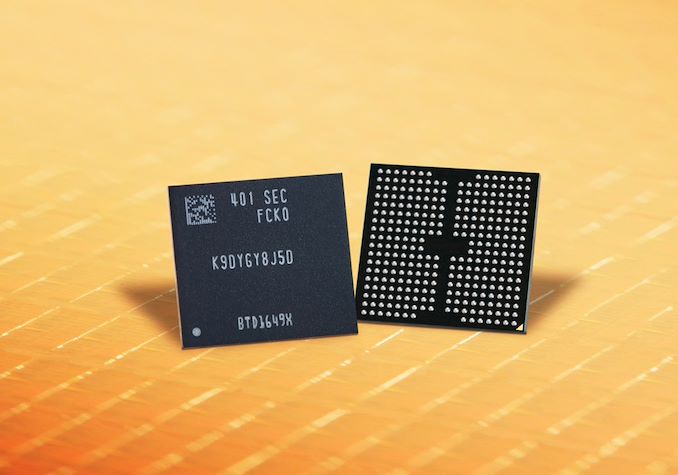

Samsung Electronics has started mass production of its 9th generation of V-NAND memory. The first dies based on their latest NAND tech come in a 1 Tb capacity using a triple-level cell (TLC) architecture, with data transfer rates as high as 3.2 GT/s. The new 3D TLC NAND memory will initially be used to build high-capacity and high-performance SSDs, which will help to solidify Samsung's position in the storage market.
Diving right in, Samsung is conspicuously avoiding to list the number of layers in their latest generation NAND, which is the principle driving factor in increasing capacity generation-on-generation. The company's current 8th gen V-NAND is 236 layers – similar to its major competitors – and word on the street is that 9th gen V-NAND ups that to 290 layers, though this remains to be confirmed.
Regardless, Samsung says that its 9th generation V-NAND memory boasts an approximate 50% improvement in bit density over its 8th generation predecessor. Driving this gains, the company cites the miniaturization of the cell size, as well as the integration of enhanced memory cell technologies that reduce interference and extend the lifespan of the cells. With their latest NAND technology, Samsung has also been able to eliminate dummy channel holes, thus reducing the planar area of the memory cells.
Interestingly, today's announcement also marks the first time that Samsung has publicly confirmed their use of string stacking in their NAND, referring to it as their "double-stack structure." The company is widely believed to have been using sting stacking back in their 8th generation NAND as well, however this was never confirmed by the company. Regardless, the use of string stacking is only going to increase from here, as vendors look to keep adding layers to their NAND dies, while manufacturing variability and channel hole tolerances make it difficult to produce more than 150-200 layers in a single stack.
| Samsung TLC V- NAND Flash Memory | ||
| 9th Gen V-NAND | 8th Gen V-NAND | |
| Layers | 290? | 236 |
| Decks | 2 (x145) | 2 (x118) |
| Die Capacity | 1 Tbit | 1 Tbit |
| Die Size (mm2) | ?mm2 | ?mm2 |
| Density (Gbit/mm2) | ? | ? |
| I/O Speed | 3.2 GT/s (Toggle 5.1) |
2.4 GT/s (Toggle 5.0) |
| Planes | 6? | 4 |
| CuA / PuC | Yes | Yes |
Speaking of channel holes, another key technological enhancement in the 9th gen V-NAND is Samsung's advanced 'channel hole etching' technology. This process improves manufacturing productivity by enabling the simultaneous creation of electron pathways within a double-stack structure. This method is crucial as it enables efficient drilling through more layers, which is increasingly important as cell layers are added.
The latest V-NAND also features the introduction of a faster NAND flash interface, Toggle DDR 5.1, which boosts peak data transfer rates by 33% to 3.2 GT/s, or almost 400MB/sec for a single die. Additionally, 9th gen V-NAND's power consumption has been reduced by 10%, according to Samsung. Though Samsung doesn't state under what conditions – presumably, this is at iso-frequency rather than max frequency.
Samsung's launch of 1Tb TLC V-NAND is set to be followed by the release of a quad-level cell (QLC) model later this year.
"We are excited to deliver the industry’s first 9th-gen V-NAND which will bring future... SSDs


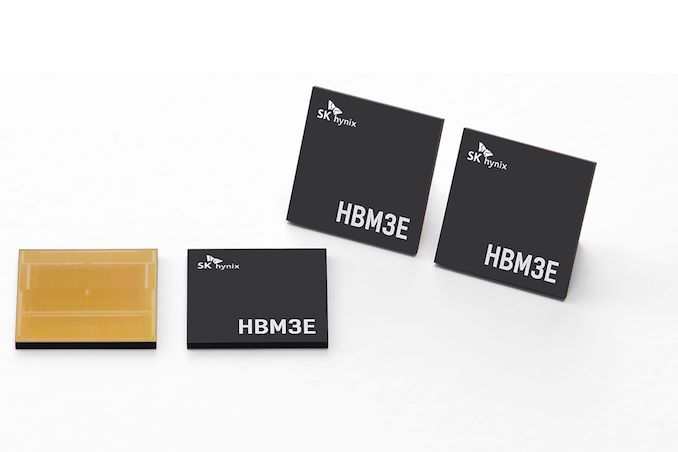
Demand for high-performance processors for AI training is skyrocketing, and consequently so is the demand for the components that go into these processors. So much so that SK hynix this week is very publicly announcing that the company's high-bandwidth memory (HBM) production capacity has already sold out for the rest of 2024, and even most of 2025 has already sold out as well.
SK hynix currently produces various types of HBM memory for customers like Amazon, AMD, Facebook, Google (Broadcom), Intel, Microsoft, and, of course, NVIDIA. The latter is an especially prolific consumer of HBM3 and HBM3E memory for its H100/H200/GH200 accelerators, as NVIDIA is also working to fill what remains an insatiable (and unmet) demand for its accelerators.
As a result, HBM memory orders, which are already placed months in advance, are now backlogging well into 2025 as chip vendors look to secure supplies of the memory stacks critical to their success.
This has made SK hynix the secnd HBM memory vendor in recent months to announce that they've sold out into 2025, following an earlier announcement from Micron regarding its HBM3E production. But of the two announcements, SK hynix's is arguably the most significant yet, as the South Korean firm's HBM production capacity is far greater than Micron's. So while things were merely "interesting" with the smallest of the Big Three memory manufacturers being sold out into 2025, things are taking a more concerning (and constrained) outlook now that SK hynix is as well.
SK hynix currently controls roughly 46% - 49% of HBM market, and its share is not expected to drop significantly in 2025, according to market tracking firm TrendForce. By contrast, Micron's share on HBM memory market is between 4% and 6%. Since HBM supply of both companies is sold out through the most of 2025, we're likely looking at a scenario where over 50% of the industry's total HBM3/HBM3E supply for the coming quarters is already sold out.
This leaves Samsung as the only member of the group not to comment on HBM demand so far. Though with memory being a highly fungible commodity product, it would be surprising if Samsung wasn't facing similar demand. And, ultimately, all of this is pointing towards the indusry entering an HBM3 memory shortage.
Separately, SK hynix said that it is sampling 12-Hi 36GB HBM3E stacks with customers and will begin volume shipments in the third quarter.
Memory
Demand for high-performance processors for AI training is skyrocketing, and consequently so is the demand for the components that go into these processors. So much so that SK hynix this week is very publicly announcing that the company's high-bandwidth memory (HBM) production capacity has already sold out for the rest of 2024, and even most of 2025 has already sold out as well.
SK hynix currently produces various types of HBM memory for customers like Amazon, AMD, Facebook, Google (Broadcom), Intel, Microsoft, and, of course, NVIDIA. The latter is an especially prolific consumer of HBM3 and HBM3E memory for its H100/H200/GH200 accelerators, as NVIDIA is also working to fill what remains an insatiable (and unmet) demand for its accelerators.
As a result, HBM memory orders, which are already placed months in advance, are now backlogging well into 2025 as chip vendors look to secure supplies of the memory stacks critical to their success.
This has made SK hynix the secnd HBM memory vendor in recent months to announce that they've sold out into 2025, following an earlier announcement from Micron regarding its HBM3E production. But of the two announcements, SK hynix's is arguably the most significant yet, as the South Korean firm's HBM production capacity is far greater than Micron's. So while things were merely "interesting" with the smallest of the Big Three memory manufacturers being sold out into 2025, things are taking a more concerning (and constrained) outlook now that SK hynix is as well.
SK hynix currently controls roughly 46% - 49% of HBM market, and its share is not expected to drop significantly in 2025, according to market tracking firm TrendForce. By contrast, Micron's share on HBM memory market is between 4% and 6%. Since HBM supply of both companies is sold out through the most of 2025, we're likely looking at a scenario where over 50% of the industry's total HBM3/HBM3E supply for the coming quarters is already sold out.
This leaves Samsung as the only member of the group not to comment on HBM demand so far. Though with memory being a highly fungible commodity product, it would be surprising if Samsung wasn't facing similar demand. And, ultimately, all of this is pointing towards the indusry entering an HBM3 memory shortage.
Separately, SK hynix said that it is sampling 12-Hi 36GB HBM3E stacks with customers and will begin volume shipments in the third quarter.
Memory
Lorem Ipsum is simply dummy text of the printing and typesetting industry. Lorem Ipsum has been the industry's.
Demand for high-performance processors for AI training is skyrocketing, and consequently so is the demand for the components that go into these processors. So much so that SK hynix this week is very publicly announcing that the company's high-bandwidth memory (HBM) production capacity has already sold out for the rest of 2024, and even most of 2025 has already sold out as well.
SK hynix currently produces various types of HBM memory for customers like Amazon, AMD, Facebook, Google (Broadcom), Intel, Microsoft, and, of course, NVIDIA. The latter is an especially prolific consumer of HBM3 and HBM3E memory for its H100/H200/GH200 accelerators, as NVIDIA is also working to fill what remains an insatiable (and unmet) demand for its accelerators.
As a result, HBM memory orders, which are already placed months in advance, are now backlogging well into 2025 as chip vendors look to secure supplies of the memory stacks critical to their success.
This has made SK hynix the secnd HBM memory vendor in recent months to announce that they've sold out into 2025, following an earlier announcement from Micron regarding its HBM3E production. But of the two announcements, SK hynix's is arguably the most significant yet, as the South Korean firm's HBM production capacity is far greater than Micron's. So while things were merely "interesting" with the smallest of the Big Three memory manufacturers being sold out into 2025, things are taking a more concerning (and constrained) outlook now that SK hynix is as well.
SK hynix currently controls roughly 46% - 49% of HBM market, and its share is not expected to drop significantly in 2025, according to market tracking firm TrendForce. By contrast, Micron's share on HBM memory market is between 4% and 6%. Since HBM supply of both companies is sold out through the most of 2025, we're likely looking at a scenario where over 50% of the industry's total HBM3/HBM3E supply for the coming quarters is already sold out.
This leaves Samsung as the only member of the group not to comment on HBM demand so far. Though with memory being a highly fungible commodity product, it would be surprising if Samsung wasn't facing similar demand. And, ultimately, all of this is pointing towards the indusry entering an HBM3 memory shortage.
Separately, SK hynix said that it is sampling 12-Hi 36GB HBM3E stacks with customers and will begin volume shipments in the third quarter.
Memory



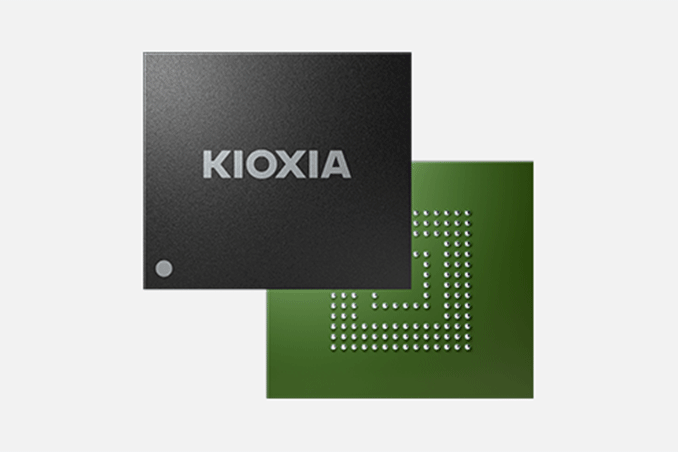
 architecture, with data transfer rates as high as 3.2 GT/s. The new 3D TLC NAND memory will initially be used to build high-capacity and high-performance SSDs, which will help to solidify Samsung's position in the storage market.</p>
<p>Diving right in, Samsung is conspicuously avoiding to list the number of layers in their latest generation NAND, which is the principle driving factor in increasing capacity generation-on-generation. The company's current 8th gen V-NAND is 236 layers – similar to its major competitors – and word on the street is that 9th gen V-NAND ups that to 290 layers, though this remains to be confirmed.</p>
<p>Regardless, Samsung says that its 9th generation V-NAND memory boasts an approximate 50% improvement in bit density over its 8th generation predecessor. Driving this gains, the company cites the miniaturization of the cell size, as well as the integration of enhanced memory cell technologies that reduce interference and extend the lifespan of the cells. With their latest NAND technology, Samsung has also been able to eliminate dummy channel holes, thus reducing the planar area of the memory cells.</p>
<p>Interestingly, today's announcement also marks the first time that Samsung has publicly confirmed their use of string stacking in their NAND, referring to it as their "double-stack structure." The company is widely believed to have been using sting stacking back in their 8th generation NAND as well, however this was never confirmed by the company. Regardless, the use of string stacking is only going to increase from here, as vendors look to keep adding layers to their NAND dies, while manufacturing variability and channel hole tolerances make it difficult to produce more than 150-200 layers in a single stack.</p>
<table border="1" cellpadding="1" cellspacing="1" width="70%">
<tbody>
<tr class="tgrey">
<td align="center" colspan="3">Samsung TLC V- NAND Flash Memory</td>
</tr>
<tr class="tlblue">
<td class="tlgrey" colspan="1" rowspan="1"> </td>
<td align="center" rowspan="1">9th Gen V-NAND</td>
<td align="center" colspan="1" rowspan="1">8th Gen V-NAND</td>
</tr>
<tr>
<td class="tlgrey" colspan="1">Layers</td>
<td align="center">290?</td>
<td align="center">236</td>
</tr>
<tr>
<td class="tlgrey" colspan="1">Decks</td>
<td align="center">2 (x145)</td>
<td align="center">2 (x118)</td>
</tr>
<tr>
<td class="tlgrey" colspan="1" rowspan="1">Die Capacity</td>
<td align="center" rowspan="1">1 Tbit</td>
<td align="center" rowspan="1">1 Tbit</td>
</tr>
<tr>
<td class="tlgrey" colspan="1" rowspan="1">Die Size (mm<sup>2</sup>)</td>
<td align="center" rowspan="1">?mm2</td>
<td align="center" rowspan="1">?mm2</td>
</tr>
<tr>
<td class="tlgrey" colspan="1" rowspan="1">Density (Gbit/mm<sup>2</sup>)</td>
<td align="center" rowspan="1">?</td>
<td align="center" rowspan="1">?</td>
</tr>
<tr>
<td class="tlgrey" colspan="1" rowspan="1">I/O Speed</td>
<td align="center" rowspan="1">3.2 GT/s<br />
(Toggle 5.1)</td>
<td align="center" rowspan="1">2.4 GT/s<br />
(Toggle 5.0)</td>
</tr>
<tr>
<td class="tlgrey" colspan="1">Planes</td>
<td align="center">6?</td>
<td align="center">4</td>
</tr>
<tr>
<td class="tlgrey" colspan="1">CuA / PuC</td>
<td align="center">Yes</td>
<td align="center">Yes</td>
</tr>
</tbody>
</table>
<p>Speaking of channel holes, another key technological enhancement in the 9th gen V-NAND is Samsung's advanced 'channel hole etching' technology. This process improves manufacturing productivity by enabling the simultaneous creation of electron pathways within a double-stack structure. This method is crucial as it enables efficient drilling through more layers, which is increasingly important as cell layers are added.</p>
<p>The latest V-NAND also features the introduction of a faster NAND flash interface, Toggle DDR 5.1, which boosts peak data transfer rates by 33% to 3.2 GT/s, or almost 400MB/sec for a single die. Additionally, 9th gen V-NAND's power consumption has been reduced by 10%, according to Samsung. Though Samsung doesn't state under what conditions – presumably, this is at iso-frequency rather than max frequency.</p>
<p>Samsung's launch of 1Tb TLC V-NAND is set to be followed by the release of a quad-level cell (QLC) model later this year.</p>
<p>"We are excited to deliver the industry’s first 9th-gen V-NAND which will bring future... SSDs)
 architecture, with data transfer rates as high as 3.2 GT/s. The new 3D TLC NAND memory will initially be used to build high-capacity and high-performance SSDs, which will help to solidify Samsung's position in the storage market.</p>
<p>Diving right in, Samsung is conspicuously avoiding to list the number of layers in their latest generation NAND, which is the principle driving factor in increasing capacity generation-on-generation. The company's current 8th gen V-NAND is 236 layers – similar to its major competitors – and word on the street is that 9th gen V-NAND ups that to 290 layers, though this remains to be confirmed.</p>
<p>Regardless, Samsung says that its 9th generation V-NAND memory boasts an approximate 50% improvement in bit density over its 8th generation predecessor. Driving this gains, the company cites the miniaturization of the cell size, as well as the integration of enhanced memory cell technologies that reduce interference and extend the lifespan of the cells. With their latest NAND technology, Samsung has also been able to eliminate dummy channel holes, thus reducing the planar area of the memory cells.</p>
<p>Interestingly, today's announcement also marks the first time that Samsung has publicly confirmed their use of string stacking in their NAND, referring to it as their "double-stack structure." The company is widely believed to have been using sting stacking back in their 8th generation NAND as well, however this was never confirmed by the company. Regardless, the use of string stacking is only going to increase from here, as vendors look to keep adding layers to their NAND dies, while manufacturing variability and channel hole tolerances make it difficult to produce more than 150-200 layers in a single stack.</p>
<table border="1" cellpadding="1" cellspacing="1" width="70%">
<tbody>
<tr class="tgrey">
<td align="center" colspan="3">Samsung TLC V- NAND Flash Memory</td>
</tr>
<tr class="tlblue">
<td class="tlgrey" colspan="1" rowspan="1"> </td>
<td align="center" rowspan="1">9th Gen V-NAND</td>
<td align="center" colspan="1" rowspan="1">8th Gen V-NAND</td>
</tr>
<tr>
<td class="tlgrey" colspan="1">Layers</td>
<td align="center">290?</td>
<td align="center">236</td>
</tr>
<tr>
<td class="tlgrey" colspan="1">Decks</td>
<td align="center">2 (x145)</td>
<td align="center">2 (x118)</td>
</tr>
<tr>
<td class="tlgrey" colspan="1" rowspan="1">Die Capacity</td>
<td align="center" rowspan="1">1 Tbit</td>
<td align="center" rowspan="1">1 Tbit</td>
</tr>
<tr>
<td class="tlgrey" colspan="1" rowspan="1">Die Size (mm<sup>2</sup>)</td>
<td align="center" rowspan="1">?mm2</td>
<td align="center" rowspan="1">?mm2</td>
</tr>
<tr>
<td class="tlgrey" colspan="1" rowspan="1">Density (Gbit/mm<sup>2</sup>)</td>
<td align="center" rowspan="1">?</td>
<td align="center" rowspan="1">?</td>
</tr>
<tr>
<td class="tlgrey" colspan="1" rowspan="1">I/O Speed</td>
<td align="center" rowspan="1">3.2 GT/s<br />
(Toggle 5.1)</td>
<td align="center" rowspan="1">2.4 GT/s<br />
(Toggle 5.0)</td>
</tr>
<tr>
<td class="tlgrey" colspan="1">Planes</td>
<td align="center">6?</td>
<td align="center">4</td>
</tr>
<tr>
<td class="tlgrey" colspan="1">CuA / PuC</td>
<td align="center">Yes</td>
<td align="center">Yes</td>
</tr>
</tbody>
</table>
<p>Speaking of channel holes, another key technological enhancement in the 9th gen V-NAND is Samsung's advanced 'channel hole etching' technology. This process improves manufacturing productivity by enabling the simultaneous creation of electron pathways within a double-stack structure. This method is crucial as it enables efficient drilling through more layers, which is increasingly important as cell layers are added.</p>
<p>The latest V-NAND also features the introduction of a faster NAND flash interface, Toggle DDR 5.1, which boosts peak data transfer rates by 33% to 3.2 GT/s, or almost 400MB/sec for a single die. Additionally, 9th gen V-NAND's power consumption has been reduced by 10%, according to Samsung. Though Samsung doesn't state under what conditions – presumably, this is at iso-frequency rather than max frequency.</p>
<p>Samsung's launch of 1Tb TLC V-NAND is set to be followed by the release of a quad-level cell (QLC) model later this year.</p>
<p>"We are excited to deliver the industry’s first 9th-gen V-NAND which will bring future... SSDs)
 architecture, with data transfer rates as high as 3.2 GT/s. The new 3D TLC NAND memory will initially be used to build high-capacity and high-performance SSDs, which will help to solidify Samsung's position in the storage market.</p>
<p>Diving right in, Samsung is conspicuously avoiding to list the number of layers in their latest generation NAND, which is the principle driving factor in increasing capacity generation-on-generation. The company's current 8th gen V-NAND is 236 layers – similar to its major competitors – and word on the street is that 9th gen V-NAND ups that to 290 layers, though this remains to be confirmed.</p>
<p>Regardless, Samsung says that its 9th generation V-NAND memory boasts an approximate 50% improvement in bit density over its 8th generation predecessor. Driving this gains, the company cites the miniaturization of the cell size, as well as the integration of enhanced memory cell technologies that reduce interference and extend the lifespan of the cells. With their latest NAND technology, Samsung has also been able to eliminate dummy channel holes, thus reducing the planar area of the memory cells.</p>
<p>Interestingly, today's announcement also marks the first time that Samsung has publicly confirmed their use of string stacking in their NAND, referring to it as their "double-stack structure." The company is widely believed to have been using sting stacking back in their 8th generation NAND as well, however this was never confirmed by the company. Regardless, the use of string stacking is only going to increase from here, as vendors look to keep adding layers to their NAND dies, while manufacturing variability and channel hole tolerances make it difficult to produce more than 150-200 layers in a single stack.</p>
<table border="1" cellpadding="1" cellspacing="1" width="70%">
<tbody>
<tr class="tgrey">
<td align="center" colspan="3">Samsung TLC V- NAND Flash Memory</td>
</tr>
<tr class="tlblue">
<td class="tlgrey" colspan="1" rowspan="1"> </td>
<td align="center" rowspan="1">9th Gen V-NAND</td>
<td align="center" colspan="1" rowspan="1">8th Gen V-NAND</td>
</tr>
<tr>
<td class="tlgrey" colspan="1">Layers</td>
<td align="center">290?</td>
<td align="center">236</td>
</tr>
<tr>
<td class="tlgrey" colspan="1">Decks</td>
<td align="center">2 (x145)</td>
<td align="center">2 (x118)</td>
</tr>
<tr>
<td class="tlgrey" colspan="1" rowspan="1">Die Capacity</td>
<td align="center" rowspan="1">1 Tbit</td>
<td align="center" rowspan="1">1 Tbit</td>
</tr>
<tr>
<td class="tlgrey" colspan="1" rowspan="1">Die Size (mm<sup>2</sup>)</td>
<td align="center" rowspan="1">?mm2</td>
<td align="center" rowspan="1">?mm2</td>
</tr>
<tr>
<td class="tlgrey" colspan="1" rowspan="1">Density (Gbit/mm<sup>2</sup>)</td>
<td align="center" rowspan="1">?</td>
<td align="center" rowspan="1">?</td>
</tr>
<tr>
<td class="tlgrey" colspan="1" rowspan="1">I/O Speed</td>
<td align="center" rowspan="1">3.2 GT/s<br />
(Toggle 5.1)</td>
<td align="center" rowspan="1">2.4 GT/s<br />
(Toggle 5.0)</td>
</tr>
<tr>
<td class="tlgrey" colspan="1">Planes</td>
<td align="center">6?</td>
<td align="center">4</td>
</tr>
<tr>
<td class="tlgrey" colspan="1">CuA / PuC</td>
<td align="center">Yes</td>
<td align="center">Yes</td>
</tr>
</tbody>
</table>
<p>Speaking of channel holes, another key technological enhancement in the 9th gen V-NAND is Samsung's advanced 'channel hole etching' technology. This process improves manufacturing productivity by enabling the simultaneous creation of electron pathways within a double-stack structure. This method is crucial as it enables efficient drilling through more layers, which is increasingly important as cell layers are added.</p>
<p>The latest V-NAND also features the introduction of a faster NAND flash interface, Toggle DDR 5.1, which boosts peak data transfer rates by 33% to 3.2 GT/s, or almost 400MB/sec for a single die. Additionally, 9th gen V-NAND's power consumption has been reduced by 10%, according to Samsung. Though Samsung doesn't state under what conditions – presumably, this is at iso-frequency rather than max frequency.</p>
<p>Samsung's launch of 1Tb TLC V-NAND is set to be followed by the release of a quad-level cell (QLC) model later this year.</p>
<p>"We are excited to deliver the industry’s first 9th-gen V-NAND which will bring future... SSDs | https://compbuddey.blogspot.com/2024/05/samsung-starts-mass-production-of-9th_8.html)
 architecture, with data transfer rates as high as 3.2 GT/s. The new 3D TLC NAND memory will initially be used to build high-capacity and high-performance SSDs, which will help to solidify Samsung's position in the storage market.</p>
<p>Diving right in, Samsung is conspicuously avoiding to list the number of layers in their latest generation NAND, which is the principle driving factor in increasing capacity generation-on-generation. The company's current 8th gen V-NAND is 236 layers – similar to its major competitors – and word on the street is that 9th gen V-NAND ups that to 290 layers, though this remains to be confirmed.</p>
<p>Regardless, Samsung says that its 9th generation V-NAND memory boasts an approximate 50% improvement in bit density over its 8th generation predecessor. Driving this gains, the company cites the miniaturization of the cell size, as well as the integration of enhanced memory cell technologies that reduce interference and extend the lifespan of the cells. With their latest NAND technology, Samsung has also been able to eliminate dummy channel holes, thus reducing the planar area of the memory cells.</p>
<p>Interestingly, today's announcement also marks the first time that Samsung has publicly confirmed their use of string stacking in their NAND, referring to it as their "double-stack structure." The company is widely believed to have been using sting stacking back in their 8th generation NAND as well, however this was never confirmed by the company. Regardless, the use of string stacking is only going to increase from here, as vendors look to keep adding layers to their NAND dies, while manufacturing variability and channel hole tolerances make it difficult to produce more than 150-200 layers in a single stack.</p>
<table border="1" cellpadding="1" cellspacing="1" width="70%">
<tbody>
<tr class="tgrey">
<td align="center" colspan="3">Samsung TLC V- NAND Flash Memory</td>
</tr>
<tr class="tlblue">
<td class="tlgrey" colspan="1" rowspan="1"> </td>
<td align="center" rowspan="1">9th Gen V-NAND</td>
<td align="center" colspan="1" rowspan="1">8th Gen V-NAND</td>
</tr>
<tr>
<td class="tlgrey" colspan="1">Layers</td>
<td align="center">290?</td>
<td align="center">236</td>
</tr>
<tr>
<td class="tlgrey" colspan="1">Decks</td>
<td align="center">2 (x145)</td>
<td align="center">2 (x118)</td>
</tr>
<tr>
<td class="tlgrey" colspan="1" rowspan="1">Die Capacity</td>
<td align="center" rowspan="1">1 Tbit</td>
<td align="center" rowspan="1">1 Tbit</td>
</tr>
<tr>
<td class="tlgrey" colspan="1" rowspan="1">Die Size (mm<sup>2</sup>)</td>
<td align="center" rowspan="1">?mm2</td>
<td align="center" rowspan="1">?mm2</td>
</tr>
<tr>
<td class="tlgrey" colspan="1" rowspan="1">Density (Gbit/mm<sup>2</sup>)</td>
<td align="center" rowspan="1">?</td>
<td align="center" rowspan="1">?</td>
</tr>
<tr>
<td class="tlgrey" colspan="1" rowspan="1">I/O Speed</td>
<td align="center" rowspan="1">3.2 GT/s<br />
(Toggle 5.1)</td>
<td align="center" rowspan="1">2.4 GT/s<br />
(Toggle 5.0)</td>
</tr>
<tr>
<td class="tlgrey" colspan="1">Planes</td>
<td align="center">6?</td>
<td align="center">4</td>
</tr>
<tr>
<td class="tlgrey" colspan="1">CuA / PuC</td>
<td align="center">Yes</td>
<td align="center">Yes</td>
</tr>
</tbody>
</table>
<p>Speaking of channel holes, another key technological enhancement in the 9th gen V-NAND is Samsung's advanced 'channel hole etching' technology. This process improves manufacturing productivity by enabling the simultaneous creation of electron pathways within a double-stack structure. This method is crucial as it enables efficient drilling through more layers, which is increasingly important as cell layers are added.</p>
<p>The latest V-NAND also features the introduction of a faster NAND flash interface, Toggle DDR 5.1, which boosts peak data transfer rates by 33% to 3.2 GT/s, or almost 400MB/sec for a single die. Additionally, 9th gen V-NAND's power consumption has been reduced by 10%, according to Samsung. Though Samsung doesn't state under what conditions – presumably, this is at iso-frequency rather than max frequency.</p>
<p>Samsung's launch of 1Tb TLC V-NAND is set to be followed by the release of a quad-level cell (QLC) model later this year.</p>
<p>"We are excited to deliver the industry’s first 9th-gen V-NAND which will bring future... SSDs&body=https://compbuddey.blogspot.com/2024/05/samsung-starts-mass-production-of-9th_8.html)


0 Comments