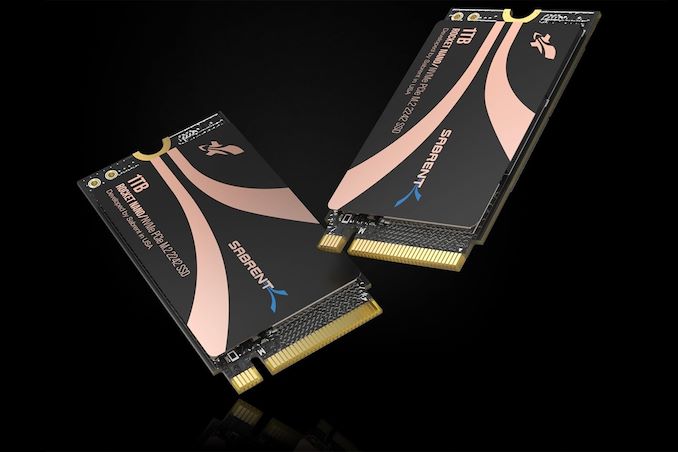

Sabrent tends to get into news when it launches ultra-high-performance SSDs for enthusiast-grade desktops, but this week the company introduced a completely different type of product: a small form-factor M.2-2242 SSD aimed at Lenovo's Legion Go handheld and ultra-thin laptops that don't accomodate M.2-2280 drives. And even though it's not an enthusiast-grade drive, the Rocket Nano still boasts with quite decent performance and capacity.
The Sabrent Rocket Nano 2242 (SB-2142) drive is based on the Phison E27T platform, a PCIe 4.0 x4 controller that is that is designed for mainstream DRAM-less SSDs, and in the case of the Rocket Nano, is paired with 3D TLC memory. The SSD is available in a single 1TB configuration, and is rated for read speeds up to 5 GB/s. Interestingly, the Phison E27T controller itself is rated for read speeds up to 7 GB/s, so it appears that the petite Rocket Nano isn't making full use of the controller's performance.
Sabrent positions its Rocket Nano 2242 SSD as drives for upgrading Lenovo's Legion Go portable game console, select Lenovo ThinkPad laptops, and other M.2-2242-sized PCs that can't accomodate larger 2280 drives. Keeping in mind that most devices shipping with M.2-2242 SSDscome with pretty slow stock drives, Sabrent solution seems to be a viable product for such upgrades. All the while, Sabrent's Rocket Nano 2242 will also work in systems with a PCIe 3.0 x4 M.2 slots, so the market for these drives is pretty wide.
Sabrent's Rocket Nano 2242 SSD 1 TB (SB-2142-1TB) SSD has a recommended price of $99.99, which is more or less in line with other 1 TB drives in the same form-factor and offering comparable performance. The SSD is currently available at Amazon for $101.
Sources: Tom's Hardware, Sabrent
Storage

It is with great sadness that I find myself penning the hardest news post I’ve ever needed to write here at AnandTech. After over 27 years of covering the wide – and wild – world of computing hardware, today is AnandTech’s final day of publication.
For better or worse, we’ve reached the end of a long journey – one that started with a review of an AMD processor, and has ended with the review of an AMD processor. It’s fittingly poetic, but it is also a testament to the fact that we’ve spent the last 27 years doing what we love, covering the chips that are the lifeblood of the computing industry.
A lot of things have changed in the last quarter-century – in 1997 NVIDIA had yet to even coin the term “GPU” – and we’ve been fortunate to watch the world of hardware continue to evolve over the time period. We’ve gone from boxy desktop computers and laptops that today we’d charitably classify as portable desktops, to pocket computers where even the cheapest budget device puts the fastest PC of 1997 to shame.
The years have also brought some monumental changes to the world of publishing. AnandTech was hardly the first hardware enthusiast website, nor will we be the last. But we were fortunate to thrive in the past couple of decades, when so many of our peers did not, thanks to a combination of hard work, strategic investments in people and products, even more hard work, and the support of our many friends, colleagues, and readers.
Still, few things last forever, and the market for written tech journalism is not what it once was – nor will it ever be again. So, the time has come for AnandTech to wrap up its work, and let the next generation of tech journalists take their place within the zeitgeist.
It has been my immense privilege to write for AnandTech for the past 19 years – and to manage it as its editor-in-chief for the past decade. And while I carry more than a bit of remorse in being AnandTech’s final boss, I can at least take pride in everything we’ve accomplished over the years, whether it’s lauding some legendary products, writing technology primers that still remain relevant today, or watching new stars rise in expected places. There is still more that I had wanted AnandTech to do, but after 21,500 articles, this was a good start.
And while the AnandTech staff is riding off into the sunset, I am happy to report that the site itself won’t be going anywhere for a while. Our publisher, Future PLC, will be keeping the AnandTech website and its many articles live indefinitely. So that all of the content we’ve created over the years remains accessible and citable. Even without new articles to add to the collection, I expect that many of the things we’ve written over the past couple of decades will remain relevant for years to come – and remain accessible just as long.
The AnandTech Forums will also continue to be operated by Future’s community team and our dedicated troop of moderators. With forum threads going back to 1999 (and some active members just as long), the forums have a history almost as long and as storied as AnandTech itself (wounded monitor children, anyone?). So even when AnandTech is no longer publishing articles, we’ll still have a place for everyone to talk about the latest in technology – and have those discussions last longer than 48 hours.
Finally, for everyone who still needs their technical writing fix, our formidable opposition of the last 27 years and fellow Future brand, Tom’s Hardware, is continuing to cover the world of technology. There are a couple of familiar AnandTech faces already over there providing their accumulated expertise, and the site will continue doing its best to provide a written take on technology news.
As I look back on everything AnandTech has accomplished over the past 27 years, there are more than a few people, groups, and companies that I would like to thank on behalf of both myself and AnandTech as a whole.
First and foremost, I cannot thank enough all the editors who have worked for AnandTech over the years. T... Site Updates

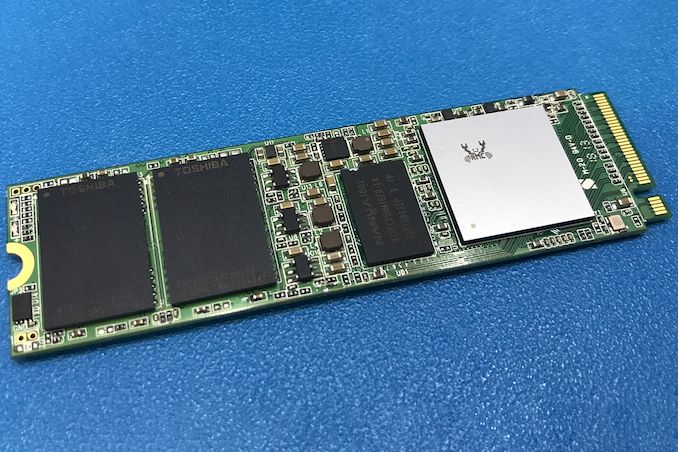
While Realtek is best known in the enthusiast space for for its peripheral controllers such as audio codecs and network controllers, the company also has a small-but-respectable SSD controller business that tends to fly under the radar due to its focus on entry-level and mainstream drives. But Realtek's stature in the SSD space is on the rise, as the company is not only planning new PCIe Gen5 SSD controllers, but also their first high-end, DRAM-equipped SSD controller.
For this year's Computex trade show, Realtek laid out a new SSD controller roadmap that calls for the company to release a trio of new SSD controllers over the next couple of years. First up is a new four-channel entry-level PCIe 4.0 controller, the RTS5776DL, which will be joined a bit later by a PCIe 5.0 variant, the RTS5781DL. But most interesting on Realtek's new roadmap is the final chip being planned: the eight-channel, DRAM-equipped RTS5782, which would be the company's first high-end SSD controller, capable of hitting sequential read rates as high as 14GB/second.
| Realtek NVMe SSD Controller Comparison | |||||||||
| RTS5782 | RTS5781DL | RTS5776DL | RTS5772DL | RTS5766DL | |||||
| Market Segment | High-End | Mainstream | Entry-Level | ||||||
| Error Correction | 4K LDPC | 2K LDPC | |||||||
| DRAM | DDR4, LPDDR4(X) | No | No | No | No | ||||
| Host Interface | PCIe 5.0 x4 | PCIe 5.0 x4 | PCIe 4.0 x4 | PCIe 4.0 x4 | PCIe 3.0 x4 | ||||
| NVMe Version | NVMe 2.0 | NVMe 2.0 | NVMe 2.0 | NVMe 1.4 | NVMe 1.4 | ||||
| NAND Channels, Interface Speed | 8 ch, 3600 MT/s |
4 ch, 3600 MT/s |
4 ch, 3600 MT/s |
8 ch, 1600 MT/s |
4 ch, 1200 MT/s |
||||
| Sequential Read | 14 GB/s | 10 GB/s | 7.4 GB/s | 6 GB/s | 3.2 GB/s | ||||
| Sequential Write | 12 GB/s | 10 GB/s | 7.4 GB/s | 6 GB/s | 2.2 GB/s | ||||
| 4KB Random Read IOPS | 2500k | 1400k | 1200k | - | - | ||||
| 4KB Random Write IOPS | 2500k | 1400k | 1200k | - | - | ||||
Diving a bit deeper into Realtek's roadmap, the RTS5776DL is traditional DRAM-less PCIe Gen4 x4 controller with four NAND chann... SSDs
It is with great sadness that I find myself penning the hardest news post I’ve ever needed to write here at AnandTech. After over 27 years of covering the wide – and wild – world of computing hardware, today is AnandTech’s final day of publication.
For better or worse, we’ve reached the end of a long journey – one that started with a review of an AMD processor, and has ended with the review of an AMD processor. It’s fittingly poetic, but it is also a testament to the fact that we’ve spent the last 27 years doing what we love, covering the chips that are the lifeblood of the computing industry.
A lot of things have changed in the last quarter-century – in 1997 NVIDIA had yet to even coin the term “GPU” – and we’ve been fortunate to watch the world of hardware continue to evolve over the time period. We’ve gone from boxy desktop computers and laptops that today we’d charitably classify as portable desktops, to pocket computers where even the cheapest budget device puts the fastest PC of 1997 to shame.
The years have also brought some monumental changes to the world of publishing. AnandTech was hardly the first hardware enthusiast website, nor will we be the last. But we were fortunate to thrive in the past couple of decades, when so many of our peers did not, thanks to a combination of hard work, strategic investments in people and products, even more hard work, and the support of our many friends, colleagues, and readers.
Still, few things last forever, and the market for written tech journalism is not what it once was – nor will it ever be again. So, the time has come for AnandTech to wrap up its work, and let the next generation of tech journalists take their place within the zeitgeist.
It has been my immense privilege to write for AnandTech for the past 19 years – and to manage it as its editor-in-chief for the past decade. And while I carry more than a bit of remorse in being AnandTech’s final boss, I can at least take pride in everything we’ve accomplished over the years, whether it’s lauding some legendary products, writing technology primers that still remain relevant today, or watching new stars rise in expected places. There is still more that I had wanted AnandTech to do, but after 21,500 articles, this was a good start.
And while the AnandTech staff is riding off into the sunset, I am happy to report that the site itself won’t be going anywhere for a while. Our publisher, Future PLC, will be keeping the AnandTech website and its many articles live indefinitely. So that all of the content we’ve created over the years remains accessible and citable. Even without new articles to add to the collection, I expect that many of the things we’ve written over the past couple of decades will remain relevant for years to come – and remain accessible just as long.
The AnandTech Forums will also continue to be operated by Future’s community team and our dedicated troop of moderators. With forum threads going back to 1999 (and some active members just as long), the forums have a history almost as long and as storied as AnandTech itself (wounded monitor children, anyone?). So even when AnandTech is no longer publishing articles, we’ll still have a place for everyone to talk about the latest in technology – and have those discussions last longer than 48 hours.
Finally, for everyone who still needs their technical writing fix, our formidable opposition of the last 27 years and fellow Future brand, Tom’s Hardware, is continuing to cover the world of technology. There are a couple of familiar AnandTech faces already over there providing their accumulated expertise, and the site will continue doing its best to provide a written take on technology news.
As I look back on everything AnandTech has accomplished over the past 27 years, there are more than a few people, groups, and companies that I would like to thank on behalf of both myself and AnandTech as a whole.
First and foremost, I cannot thank enough all the editors who have worked for AnandTech over the years. T... Site Updates
While Realtek is best known in the enthusiast space for for its peripheral controllers such as audio codecs and network controllers, the company also has a small-but-respectable SSD controller business that tends to fly under the radar due to its focus on entry-level and mainstream drives. But Realtek's stature in the SSD space is on the rise, as the company is not only planning new PCIe Gen5 SSD controllers, but also their first high-end, DRAM-equipped SSD controller.
For this year's Computex trade show, Realtek laid out a new SSD controller roadmap that calls for the company to release a trio of new SSD controllers over the next couple of years. First up is a new four-channel entry-level PCIe 4.0 controller, the RTS5776DL, which will be joined a bit later by a PCIe 5.0 variant, the RTS5781DL. But most interesting on Realtek's new roadmap is the final chip being planned: the eight-channel, DRAM-equipped RTS5782, which would be the company's first high-end SSD controller, capable of hitting sequential read rates as high as 14GB/second.
| Realtek NVMe SSD Controller Comparison | |||||||||
| RTS5782 | RTS5781DL | RTS5776DL | RTS5772DL | RTS5766DL | |||||
| Market Segment | High-End | Mainstream | Entry-Level | ||||||
| Error Correction | 4K LDPC | 2K LDPC | |||||||
| DRAM | DDR4, LPDDR4(X) | No | No | No | No | ||||
| Host Interface | PCIe 5.0 x4 | PCIe 5.0 x4 | PCIe 4.0 x4 | PCIe 4.0 x4 | PCIe 3.0 x4 | ||||
| NVMe Version | NVMe 2.0 | NVMe 2.0 | NVMe 2.0 | NVMe 1.4 | NVMe 1.4 | ||||
| NAND Channels, Interface Speed | 8 ch, 3600 MT/s |
4 ch, 3600 MT/s |
4 ch, 3600 MT/s |
8 ch, 1600 MT/s |
4 ch, 1200 MT/s |
||||
| Sequential Read | 14 GB/s | 10 GB/s | 7.4 GB/s | 6 GB/s | 3.2 GB/s | ||||
| Sequential Write | 12 GB/s | 10 GB/s | 7.4 GB/s | 6 GB/s | 2.2 GB/s | ||||
| 4KB Random Read IOPS | 2500k | 1400k | 1200k | - | - | ||||
| 4KB Random Write IOPS | 2500k | 1400k | 1200k | - | - | ||||
Diving a bit deeper into Realtek's roadmap, the RTS5776DL is traditional DRAM-less PCIe Gen4 x4 controller with four NAND chann... SSDs

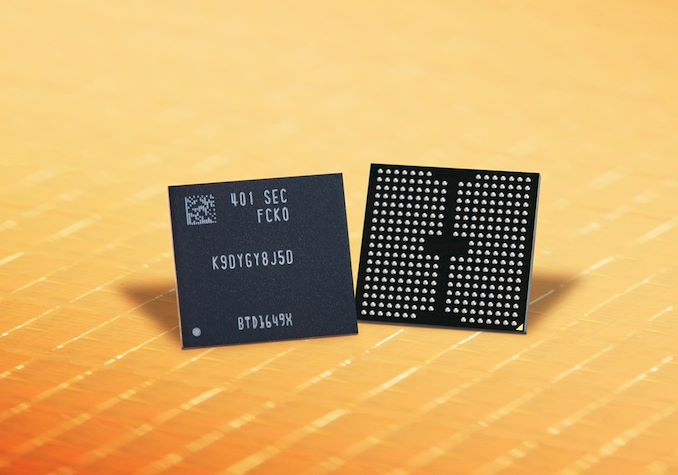
Samsung Electronics has started mass production of its 9th generation of V-NAND memory. The first dies based on their latest NAND tech come in a 1 Tb capacity using a triple-level cell (TLC) architecture, with data transfer rates as high as 3.2 GT/s. The new 3D TLC NAND memory will initially be used to build high-capacity and high-performance SSDs, which will help to solidify Samsung's position in the storage market.
Diving right in, Samsung is conspicuously avoiding to list the number of layers in their latest generation NAND, which is the principle driving factor in increasing capacity generation-on-generation. The company's current 8th gen V-NAND is 236 layers – similar to its major competitors – and word on the street is that 9th gen V-NAND ups that to 290 layers, though this remains to be confirmed.
Regardless, Samsung says that its 9th generation V-NAND memory boasts an approximate 50% improvement in bit density over its 8th generation predecessor. Driving this gains, the company cites the miniaturization of the cell size, as well as the integration of enhanced memory cell technologies that reduce interference and extend the lifespan of the cells. With their latest NAND technology, Samsung has also been able to eliminate dummy channel holes, thus reducing the planar area of the memory cells.
Interestingly, today's announcement also marks the first time that Samsung has publicly confirmed their use of string stacking in their NAND, referring to it as their "double-stack structure." The company is widely believed to have been using sting stacking back in their 8th generation NAND as well, however this was never confirmed by the company. Regardless, the use of string stacking is only going to increase from here, as vendors look to keep adding layers to their NAND dies, while manufacturing variability and channel hole tolerances make it difficult to produce more than 150-200 layers in a single stack.
| Samsung TLC V- NAND Flash Memory | ||
| 9th Gen V-NAND | 8th Gen V-NAND | |
| Layers | 290? | 236 |
| Decks | 2 (x145) | 2 (x118) |
| Die Capacity | 1 Tbit | 1 Tbit |
| Die Size (mm2) | ?mm2 | ?mm2 |
| Density (Gbit/mm2) | ? | ? |
| I/O Speed | 3.2 GT/s (Toggle 5.1) |
2.4 GT/s (Toggle 5.0) |
| Planes | 6? | 4 |
| CuA / PuC | Yes | Yes |
Speaking of channel holes, another key technological enhancement in the 9th gen V-NAND is Samsung's advanced 'channel hole etching' technology. This process improves manufacturing productivity by enabling the simultaneous creation of electron pathways within a double-stack structure. This method is crucial as it enables efficient drilling through more layers, which is increasingly important as cell layers are added.
The latest V-NAND also features the introduction of a faster NAND flash interface, Toggle DDR 5.1, which boosts peak data transfer rates by 33% to 3.2 GT/s, or almost 400MB/sec for a single die. Additionally, 9th gen V-NAND's power consumption has been reduced by 10%, according to Samsung. Though Samsung doesn't state under what conditions – presumably, this is at iso-frequency rather than max frequency.
Samsung's launch of 1Tb TLC V-NAND is set to be followed by the release of a quad-level cell (QLC) model later this year.
"We are excited to deliver the industry’s first 9th-gen V-NAND which will bring future... SSDs

Sabrent tends to get into news when it launches ultra-high-performance SSDs for enthusiast-grade desktops, but this week the company introduced a completely different type of product: a small form-factor M.2-2242 SSD aimed at Lenovo's Legion Go handheld and ultra-thin laptops that don't accomodate M.2-2280 drives. And even though it's not an enthusiast-grade drive, the Rocket Nano still boasts with quite decent performance and capacity.
The Sabrent Rocket Nano 2242 (SB-2142) drive is based on the Phison E27T platform, a PCIe 4.0 x4 controller that is that is designed for mainstream DRAM-less SSDs, and in the case of the Rocket Nano, is paired with 3D TLC memory. The SSD is available in a single 1TB configuration, and is rated for read speeds up to 5 GB/s. Interestingly, the Phison E27T controller itself is rated for read speeds up to 7 GB/s, so it appears that the petite Rocket Nano isn't making full use of the controller's performance.
Sabrent positions its Rocket Nano 2242 SSD as drives for upgrading Lenovo's Legion Go portable game console, select Lenovo ThinkPad laptops, and other M.2-2242-sized PCs that can't accomodate larger 2280 drives. Keeping in mind that most devices shipping with M.2-2242 SSDscome with pretty slow stock drives, Sabrent solution seems to be a viable product for such upgrades. All the while, Sabrent's Rocket Nano 2242 will also work in systems with a PCIe 3.0 x4 M.2 slots, so the market for these drives is pretty wide.
Sabrent's Rocket Nano 2242 SSD 1 TB (SB-2142-1TB) SSD has a recommended price of $99.99, which is more or less in line with other 1 TB drives in the same form-factor and offering comparable performance. The SSD is currently available at Amazon for $101.
Sources: Tom's Hardware, Sabrent
Storage
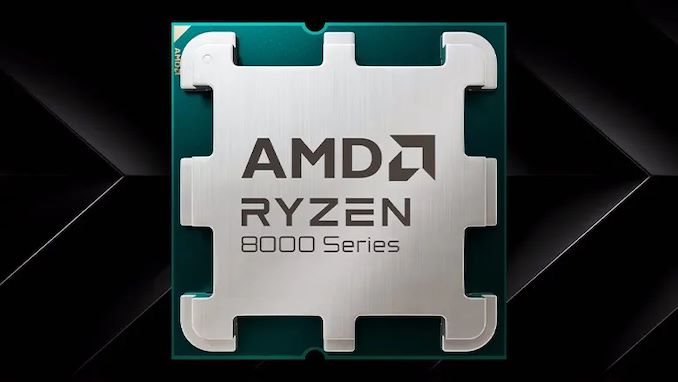
AMD has recently expanded its Ryzen 8000 series by introducing the Ryzen 7 8700F and Ryzen 5 8400F processors. Initially launched in China, these chips were added to AMD's global website, signaling they are available worldwide, apparently from April 1st. Built from the recent Zen 4-based Phoenix APUs using the TSMC 4nm node as their Zen 4 mobile chips, these new CPUs lack integrated graphics. However, the Ryzen 7 8700F does include the integrated Ryzen AI NPU for added capabilities in a world currently dominated by AI and moving it directly into the PC.
The company's decision to announce these chips in China aligns with its strategy to offer Ryzen solutions at every price point in the market. Although AMD didn't initially disclose the full specifications of these F-series models, and we did reach out to the company to ask about them, they refused to discuss them with us. Their listing on the website has now been updated with a complete list of specifications and features, with everything but the price mentioned.
| AMD Ryzen 8000G vs. Ryzen 8000F Series (Desktop) Zen 4 (Phoenix) |
|||||||||
| AnandTech | Cores/Threads | Base Freq |
Turbo Freq |
GPU | GPU Freq |
Ryzen AI (NPU) |
L3 Cache (MB) |
TDP | MSRP |
| Ryzen 7 | |||||||||
| Ryzen 7 8700G | 8/16 | 4200 | 5100 | R780M 12 CUs |
2900 | Y | 16 | 65W | $329 |
| Ryzen 7 8700F | 8/16 | 4100 | 5000 | - | - | Y | 16 | 65W | ? |
| Ryzen 5 | |||||||||
| Ryzen 5 8600G | 6/12 | 4300 | 5000 | R760M 8 CUs |
2800 | Y | 16 | 65W | $229 |
| Ryzen 5 8400F | 6/12 | 4200 | 4700 | - | - | N | 16 | 65W | ? |
The Ryzen 7 8700F features an 8C/16T design, with 16MB of L3 cache and the same 65W TDP as the Ryzen 7 8700G. Although the base clock speed is 4.1 GHz, it boosts to 5.0 GHz; this is 100 MHz less on both base/boost clocks than the 8700G. Meanwhile, the Ryzen 5 8400F is a slightly scaled-down version of the Ryzen 8600G APU, with 6C/12, 16MB of L3 cache, and again has a 100 MHz reduction to base clocks compared to the 8600G. Unlike the Ryzen 5 8400F, the Ryzen 7 8700F keeps AMD's Ryzen AI NPU, adding additional capability for generative AI.
The Ryzen 5 8400F can boost up to 4.7 GHz, 300 MHz slower than the Ryzen 5 8600G. AMD also allows overclocking for these new F-series chips, which means users could potentially boost the performance of these processors to match their G-series equivalents.
Pricing details are still pending, but to remain competitive, AMD will likely need to price these CPUs below the 8700G and 8600G, as well as the Ryzen 7 7700 and Ryzen 5 7600. These CPUs offer, albeit very limited, integrated graphics and have double the L3 cache capacity, along with higher boost clocks than the 8000F series chips, so pricing is something to consider whenever pricing becomes available.
CPUs
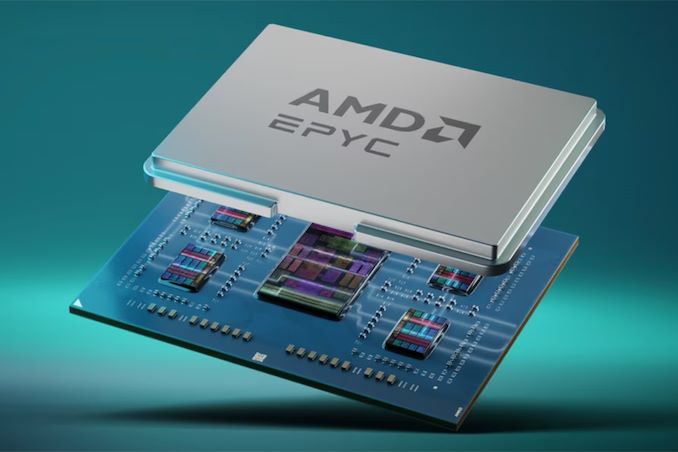
As part of AMD's Q1'2024 earnings announcement this week, the company is offering a brief status update on some of their future products set to launch later this year. Most important among these is an update on their Zen 5 CPU architecture, which is expected to launch for both client and server products later this year.
Highlighting their progress so far, AMD is confirming that EPYC "Turin" processors have begun sampling, and that these early runs of AMD's next-gen datacenter chips are meeting the company's expectations.
"Looking ahead, we are very excited about our next-gen Turin family of EPYC processors featuring our Zen 5 core," said Lisa Su, chief executive officer of AMD, at the conference call with analysts and investors (via SeekingAlpha). "We are widely sampling Turin, and the silicon is looking great. In the cloud, the significant performance and efficiency increases of Turin position us well to capture an even larger share of both first and third-party workloads."
Overall, it looks like AMD is on-track to solidify its position, and perhaps even increase its datacenter market share with its EPYC Turin processors. According to AMD, the company's server partners are developing a 30% larger number of designs for Turin than they did Genoa. This underscores how AMD's partners are preparing for even more market share growth on the back of AMD's ongoing success, not to mention the improved performance and power efficiency that the Zen 5 architecture should offer.
"In addition, there are 30% more Turin platforms in development from our server partners, compared to 4th Generation EPYC platforms, increasing our enterprise and with new solutions optimized for additional workloads," Su said. "Turin remains on track to launch later this year."
AMD's EPYC 'Turin' processors will be drop-in compatible with existing SP5 platforms (i.e., will come in an LGA 6096 package), which will facilitate its faster ramp and adoption of the platform both by cloud giants and server makers. In addition, AMD's next-generation EPYC CPUs are expected to feature more than 96 cores and a more versatile memory subsystem.
CPUs
Lorem Ipsum is simply dummy text of the printing and typesetting industry. Lorem Ipsum has been the industry's.
It is with great sadness that I find myself penning the hardest news post I’ve ever needed to write here at AnandTech. After over 27 years of covering the wide – and wild – world of computing hardware, today is AnandTech’s final day of publication.
For better or worse, we’ve reached the end of a long journey – one that started with a review of an AMD processor, and has ended with the review of an AMD processor. It’s fittingly poetic, but it is also a testament to the fact that we’ve spent the last 27 years doing what we love, covering the chips that are the lifeblood of the computing industry.
A lot of things have changed in the last quarter-century – in 1997 NVIDIA had yet to even coin the term “GPU” – and we’ve been fortunate to watch the world of hardware continue to evolve over the time period. We’ve gone from boxy desktop computers and laptops that today we’d charitably classify as portable desktops, to pocket computers where even the cheapest budget device puts the fastest PC of 1997 to shame.
The years have also brought some monumental changes to the world of publishing. AnandTech was hardly the first hardware enthusiast website, nor will we be the last. But we were fortunate to thrive in the past couple of decades, when so many of our peers did not, thanks to a combination of hard work, strategic investments in people and products, even more hard work, and the support of our many friends, colleagues, and readers.
Still, few things last forever, and the market for written tech journalism is not what it once was – nor will it ever be again. So, the time has come for AnandTech to wrap up its work, and let the next generation of tech journalists take their place within the zeitgeist.
It has been my immense privilege to write for AnandTech for the past 19 years – and to manage it as its editor-in-chief for the past decade. And while I carry more than a bit of remorse in being AnandTech’s final boss, I can at least take pride in everything we’ve accomplished over the years, whether it’s lauding some legendary products, writing technology primers that still remain relevant today, or watching new stars rise in expected places. There is still more that I had wanted AnandTech to do, but after 21,500 articles, this was a good start.
And while the AnandTech staff is riding off into the sunset, I am happy to report that the site itself won’t be going anywhere for a while. Our publisher, Future PLC, will be keeping the AnandTech website and its many articles live indefinitely. So that all of the content we’ve created over the years remains accessible and citable. Even without new articles to add to the collection, I expect that many of the things we’ve written over the past couple of decades will remain relevant for years to come – and remain accessible just as long.
The AnandTech Forums will also continue to be operated by Future’s community team and our dedicated troop of moderators. With forum threads going back to 1999 (and some active members just as long), the forums have a history almost as long and as storied as AnandTech itself (wounded monitor children, anyone?). So even when AnandTech is no longer publishing articles, we’ll still have a place for everyone to talk about the latest in technology – and have those discussions last longer than 48 hours.
Finally, for everyone who still needs their technical writing fix, our formidable opposition of the last 27 years and fellow Future brand, Tom’s Hardware, is continuing to cover the world of technology. There are a couple of familiar AnandTech faces already over there providing their accumulated expertise, and the site will continue doing its best to provide a written take on technology news.
As I look back on everything AnandTech has accomplished over the past 27 years, there are more than a few people, groups, and companies that I would like to thank on behalf of both myself and AnandTech as a whole.
First and foremost, I cannot thank enough all the editors who have worked for AnandTech over the years. T... Site Updates

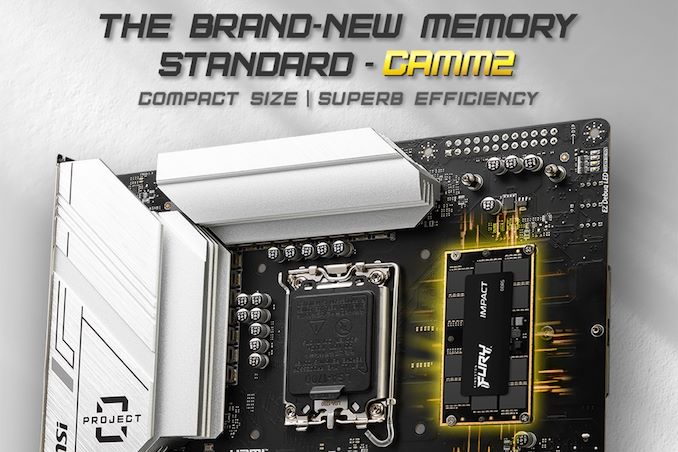
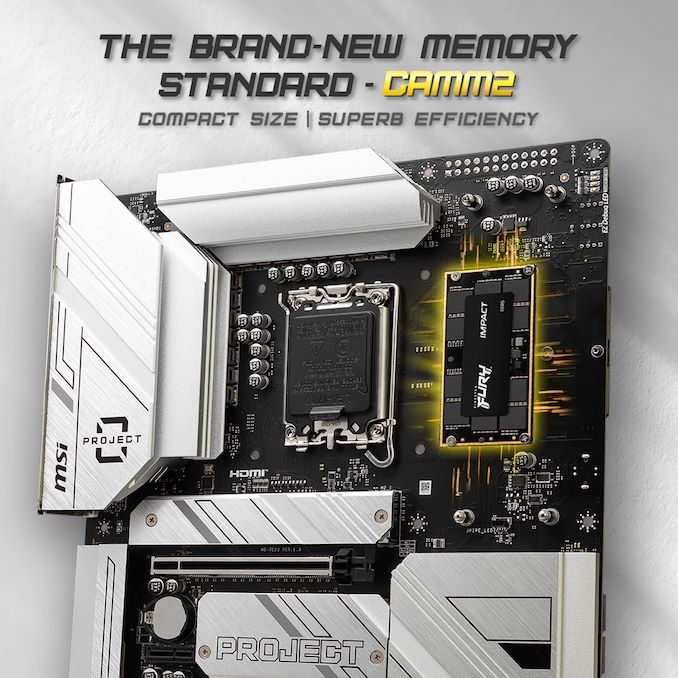



 drive is based on the <a href="https://www.phison.com/images/products_datasheet/ProductBrochure_Consumer_PS5027-E27T.pdf">Phison E27T platform</a>, a PCIe 4.0 x4 controller that is that is designed for mainstream DRAM-less SSDs, and in the case of the Rocket Nano, is paired with 3D TLC memory. The SSD is available in a single 1TB configuration, and is rated for read speeds up to 5 GB/s. Interestingly, the Phison E27T controller itself is rated for read speeds up to 7 GB/s, so it appears that the petite Rocket Nano isn't making full use of the controller's performance.</p>
<p>Sabrent positions its Rocket Nano 2242 SSD as drives for upgrading Lenovo's Legion Go portable game console, select Lenovo ThinkPad laptops, and other M.2-2242-sized PCs that can't accomodate larger 2280 drives. Keeping in mind that most devices shipping with M.2-2242 SSDscome with pretty slow stock drives, Sabrent solution seems to be a viable product for such upgrades. All the while, Sabrent's Rocket Nano 2242 will also work in systems with a PCIe 3.0 x4 M.2 slots, so the market for these drives is pretty wide.</p>
<p>Sabrent's Rocket Nano 2242 SSD 1 TB (SB-2142-1TB) SSD has a recommended price of $99.99, which is more or less in line with other 1 TB drives in the same form-factor and offering comparable performance. The SSD is currently <a href="https://target.georiot.com/Proxy.ashx?tsid=45726&GR_URL=https%3A%2F%2Famazon.com%2FSABRENT-Rocket-2242-DRAM-Less-SB-2142-1TB%2Fdp%2FB0D3FMCPRG%2F%3Ftag%3Dhawk-future-20%26ascsubtag%3Danandtech-us-1368132406969381591-20">available at Amazon for $101</a>.</p>
<p>Sources: <a href="https://www.tomshardware.com/pc-components/ssds/sabrent-debuts-5gbs-rocket-nano-2242-gen-4-ssd-a-good-fit-for-lenovo-legion-go-laptops-and-nucs">Tom's Hardware</a>, <a href="https://sabrent.com/collections/internal-memory/products/sb-2142-1tb">Sabrent</a></p>
</p> Storage)
 drive is based on the <a href="https://www.phison.com/images/products_datasheet/ProductBrochure_Consumer_PS5027-E27T.pdf">Phison E27T platform</a>, a PCIe 4.0 x4 controller that is that is designed for mainstream DRAM-less SSDs, and in the case of the Rocket Nano, is paired with 3D TLC memory. The SSD is available in a single 1TB configuration, and is rated for read speeds up to 5 GB/s. Interestingly, the Phison E27T controller itself is rated for read speeds up to 7 GB/s, so it appears that the petite Rocket Nano isn't making full use of the controller's performance.</p>
<p>Sabrent positions its Rocket Nano 2242 SSD as drives for upgrading Lenovo's Legion Go portable game console, select Lenovo ThinkPad laptops, and other M.2-2242-sized PCs that can't accomodate larger 2280 drives. Keeping in mind that most devices shipping with M.2-2242 SSDscome with pretty slow stock drives, Sabrent solution seems to be a viable product for such upgrades. All the while, Sabrent's Rocket Nano 2242 will also work in systems with a PCIe 3.0 x4 M.2 slots, so the market for these drives is pretty wide.</p>
<p>Sabrent's Rocket Nano 2242 SSD 1 TB (SB-2142-1TB) SSD has a recommended price of $99.99, which is more or less in line with other 1 TB drives in the same form-factor and offering comparable performance. The SSD is currently <a href="https://target.georiot.com/Proxy.ashx?tsid=45726&GR_URL=https%3A%2F%2Famazon.com%2FSABRENT-Rocket-2242-DRAM-Less-SB-2142-1TB%2Fdp%2FB0D3FMCPRG%2F%3Ftag%3Dhawk-future-20%26ascsubtag%3Danandtech-us-1368132406969381591-20">available at Amazon for $101</a>.</p>
<p>Sources: <a href="https://www.tomshardware.com/pc-components/ssds/sabrent-debuts-5gbs-rocket-nano-2242-gen-4-ssd-a-good-fit-for-lenovo-legion-go-laptops-and-nucs">Tom's Hardware</a>, <a href="https://sabrent.com/collections/internal-memory/products/sb-2142-1tb">Sabrent</a></p>
</p> Storage | https://compbuddey.blogspot.com/2024/05/sabrent-launches-rocket-nano-m2-2242_14.html)
 drive is based on the <a href="https://www.phison.com/images/products_datasheet/ProductBrochure_Consumer_PS5027-E27T.pdf">Phison E27T platform</a>, a PCIe 4.0 x4 controller that is that is designed for mainstream DRAM-less SSDs, and in the case of the Rocket Nano, is paired with 3D TLC memory. The SSD is available in a single 1TB configuration, and is rated for read speeds up to 5 GB/s. Interestingly, the Phison E27T controller itself is rated for read speeds up to 7 GB/s, so it appears that the petite Rocket Nano isn't making full use of the controller's performance.</p>
<p>Sabrent positions its Rocket Nano 2242 SSD as drives for upgrading Lenovo's Legion Go portable game console, select Lenovo ThinkPad laptops, and other M.2-2242-sized PCs that can't accomodate larger 2280 drives. Keeping in mind that most devices shipping with M.2-2242 SSDscome with pretty slow stock drives, Sabrent solution seems to be a viable product for such upgrades. All the while, Sabrent's Rocket Nano 2242 will also work in systems with a PCIe 3.0 x4 M.2 slots, so the market for these drives is pretty wide.</p>
<p>Sabrent's Rocket Nano 2242 SSD 1 TB (SB-2142-1TB) SSD has a recommended price of $99.99, which is more or less in line with other 1 TB drives in the same form-factor and offering comparable performance. The SSD is currently <a href="https://target.georiot.com/Proxy.ashx?tsid=45726&GR_URL=https%3A%2F%2Famazon.com%2FSABRENT-Rocket-2242-DRAM-Less-SB-2142-1TB%2Fdp%2FB0D3FMCPRG%2F%3Ftag%3Dhawk-future-20%26ascsubtag%3Danandtech-us-1368132406969381591-20">available at Amazon for $101</a>.</p>
<p>Sources: <a href="https://www.tomshardware.com/pc-components/ssds/sabrent-debuts-5gbs-rocket-nano-2242-gen-4-ssd-a-good-fit-for-lenovo-legion-go-laptops-and-nucs">Tom's Hardware</a>, <a href="https://sabrent.com/collections/internal-memory/products/sb-2142-1tb">Sabrent</a></p>
</p> Storage&body=https://compbuddey.blogspot.com/2024/05/sabrent-launches-rocket-nano-m2-2242_14.html)


0 Comments