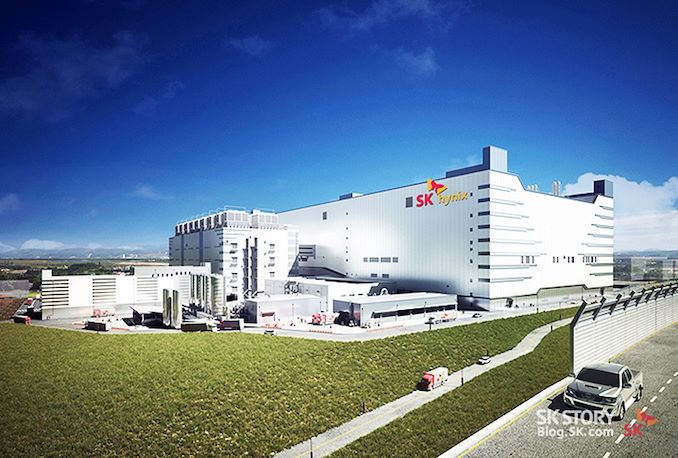

SK hynix is considering whether to build an advanced packaging facility in Indiana, reports the Wall Street Journal. If the company proceeds with the plan, it intends to invest $4 billion in it and construct one of the world's largest advanced packaging facilities. But to accomplish the project, SK hynix expects it will need help from the U.S. government.
Acknowledging the report but stopping short of confirming the company's plans, a company spokeswoman told the WSJ that SK hynix "is reviewing its advanced chip packaging investment in the U.S., but hasn’t made a final decision yet."
Companies like TSMC and Intel spend billions on advanced packaging facilities, but so far, no company has announced a chip packaging plant worth quite as much as SH hynix's $4 billion. The field of advanced packaging – CoWoS, passive silicon interposers, redistribution layers, die-to-die bonding, and other cutting edge technologies – has seen an explosion in demand in the last half-decade. As bandwidth advances with traditional organic packaging are largely played out, chip designers have needed to turn to more complex (and difficult to assemble) technologies in order to wire up an ever larger number of signals at ever-higher transfer rates. Which has turned advanced packaging into a bottleneck for high-end chip and accelerator production, driving a need for additional packaging facilities.
If SK hynix approves the project, the advanced packaging facility is expected to begin operations in 2028 and could create as many as 1,000 jobs. With an estimated cost of $4 billion, the plant is poised to become one of the largest advanced packaging facilities in the world.
Meanwhile, government backing is thought to be essential for investments of this scale, with potential state and federal tax incentives, according to the report. These incentives form part of a broader initiative to bolster the U.S. semiconductor industry and decrease dependence on memory produced in South Korea.
SK hynix is the world's leading producer of HBM memory, and is one of the key HBM suppliers to NVIDIA. Next generations of HBM memory (including HBM4 and HBM4E) will require even closer collaboration between chip designers, chipmakers, and memory makers. Therefore, packaging HBM in America could be a significant benefit for NVIDIA, AMD, and other U.S. chipmakers.
Investing in the Indiana facility will be a strategic move by SK hynix to enhance its advanced chip packaging capabilities in general and demonstrating dedication to the U.S. semiconductor industry.
Memory

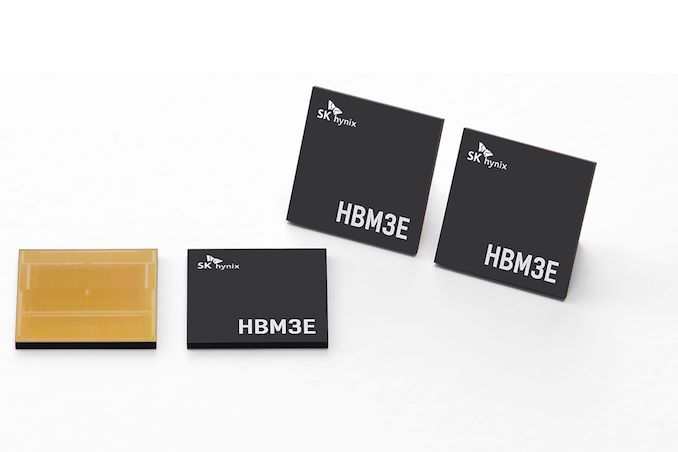
Demand for high-performance processors for AI training is skyrocketing, and consequently so is the demand for the components that go into these processors. So much so that SK hynix this week is very publicly announcing that the company's high-bandwidth memory (HBM) production capacity has already sold out for the rest of 2024, and even most of 2025 has already sold out as well.
SK hynix currently produces various types of HBM memory for customers like Amazon, AMD, Facebook, Google (Broadcom), Intel, Microsoft, and, of course, NVIDIA. The latter is an especially prolific consumer of HBM3 and HBM3E memory for its H100/H200/GH200 accelerators, as NVIDIA is also working to fill what remains an insatiable (and unmet) demand for its accelerators.
As a result, HBM memory orders, which are already placed months in advance, are now backlogging well into 2025 as chip vendors look to secure supplies of the memory stacks critical to their success.
This has made SK hynix the secnd HBM memory vendor in recent months to announce that they've sold out into 2025, following an earlier announcement from Micron regarding its HBM3E production. But of the two announcements, SK hynix's is arguably the most significant yet, as the South Korean firm's HBM production capacity is far greater than Micron's. So while things were merely "interesting" with the smallest of the Big Three memory manufacturers being sold out into 2025, things are taking a more concerning (and constrained) outlook now that SK hynix is as well.
SK hynix currently controls roughly 46% - 49% of HBM market, and its share is not expected to drop significantly in 2025, according to market tracking firm TrendForce. By contrast, Micron's share on HBM memory market is between 4% and 6%. Since HBM supply of both companies is sold out through the most of 2025, we're likely looking at a scenario where over 50% of the industry's total HBM3/HBM3E supply for the coming quarters is already sold out.
This leaves Samsung as the only member of the group not to comment on HBM demand so far. Though with memory being a highly fungible commodity product, it would be surprising if Samsung wasn't facing similar demand. And, ultimately, all of this is pointing towards the indusry entering an HBM3 memory shortage.
Separately, SK hynix said that it is sampling 12-Hi 36GB HBM3E stacks with customers and will begin volume shipments in the third quarter.
Memory
Demand for high-performance processors for AI training is skyrocketing, and consequently so is the demand for the components that go into these processors. So much so that SK hynix this week is very publicly announcing that the company's high-bandwidth memory (HBM) production capacity has already sold out for the rest of 2024, and even most of 2025 has already sold out as well.
SK hynix currently produces various types of HBM memory for customers like Amazon, AMD, Facebook, Google (Broadcom), Intel, Microsoft, and, of course, NVIDIA. The latter is an especially prolific consumer of HBM3 and HBM3E memory for its H100/H200/GH200 accelerators, as NVIDIA is also working to fill what remains an insatiable (and unmet) demand for its accelerators.
As a result, HBM memory orders, which are already placed months in advance, are now backlogging well into 2025 as chip vendors look to secure supplies of the memory stacks critical to their success.
This has made SK hynix the secnd HBM memory vendor in recent months to announce that they've sold out into 2025, following an earlier announcement from Micron regarding its HBM3E production. But of the two announcements, SK hynix's is arguably the most significant yet, as the South Korean firm's HBM production capacity is far greater than Micron's. So while things were merely "interesting" with the smallest of the Big Three memory manufacturers being sold out into 2025, things are taking a more concerning (and constrained) outlook now that SK hynix is as well.
SK hynix currently controls roughly 46% - 49% of HBM market, and its share is not expected to drop significantly in 2025, according to market tracking firm TrendForce. By contrast, Micron's share on HBM memory market is between 4% and 6%. Since HBM supply of both companies is sold out through the most of 2025, we're likely looking at a scenario where over 50% of the industry's total HBM3/HBM3E supply for the coming quarters is already sold out.
This leaves Samsung as the only member of the group not to comment on HBM demand so far. Though with memory being a highly fungible commodity product, it would be surprising if Samsung wasn't facing similar demand. And, ultimately, all of this is pointing towards the indusry entering an HBM3 memory shortage.
Separately, SK hynix said that it is sampling 12-Hi 36GB HBM3E stacks with customers and will begin volume shipments in the third quarter.
Memory
Lorem Ipsum is simply dummy text of the printing and typesetting industry. Lorem Ipsum has been the industry's.
Demand for high-performance processors for AI training is skyrocketing, and consequently so is the demand for the components that go into these processors. So much so that SK hynix this week is very publicly announcing that the company's high-bandwidth memory (HBM) production capacity has already sold out for the rest of 2024, and even most of 2025 has already sold out as well.
SK hynix currently produces various types of HBM memory for customers like Amazon, AMD, Facebook, Google (Broadcom), Intel, Microsoft, and, of course, NVIDIA. The latter is an especially prolific consumer of HBM3 and HBM3E memory for its H100/H200/GH200 accelerators, as NVIDIA is also working to fill what remains an insatiable (and unmet) demand for its accelerators.
As a result, HBM memory orders, which are already placed months in advance, are now backlogging well into 2025 as chip vendors look to secure supplies of the memory stacks critical to their success.
This has made SK hynix the secnd HBM memory vendor in recent months to announce that they've sold out into 2025, following an earlier announcement from Micron regarding its HBM3E production. But of the two announcements, SK hynix's is arguably the most significant yet, as the South Korean firm's HBM production capacity is far greater than Micron's. So while things were merely "interesting" with the smallest of the Big Three memory manufacturers being sold out into 2025, things are taking a more concerning (and constrained) outlook now that SK hynix is as well.
SK hynix currently controls roughly 46% - 49% of HBM market, and its share is not expected to drop significantly in 2025, according to market tracking firm TrendForce. By contrast, Micron's share on HBM memory market is between 4% and 6%. Since HBM supply of both companies is sold out through the most of 2025, we're likely looking at a scenario where over 50% of the industry's total HBM3/HBM3E supply for the coming quarters is already sold out.
This leaves Samsung as the only member of the group not to comment on HBM demand so far. Though with memory being a highly fungible commodity product, it would be surprising if Samsung wasn't facing similar demand. And, ultimately, all of this is pointing towards the indusry entering an HBM3 memory shortage.
Separately, SK hynix said that it is sampling 12-Hi 36GB HBM3E stacks with customers and will begin volume shipments in the third quarter.
Memory



 technologies in order to wire up an ever larger number of signals at ever-higher transfer rates. Which has turned advanced packaging into a bottleneck for high-end chip and accelerator production, driving a need for additional packaging facilities.</p>
<p>If SK hynix approves the project, the advanced packaging facility is expected to begin operations in 2028 and could create as many as 1,000 jobs. With an estimated cost of $4 billion, the plant is poised to become one of the largest advanced packaging facilities in the world.</p>
<p>Meanwhile, government backing is thought to be essential for investments of this scale, with potential state and federal tax incentives, according to the report. These incentives form part of a broader initiative to bolster the U.S. semiconductor industry and decrease dependence on memory produced in South Korea.</p>
<p>SK hynix is the world's leading producer of HBM memory, and is one of the key HBM suppliers to NVIDIA. Next generations of HBM memory (including HBM4 and HBM4E) will require even closer collaboration between chip designers, chipmakers, and memory makers. Therefore, packaging HBM in America could be a significant benefit for NVIDIA, AMD, and other U.S. chipmakers.</p>
<p>Investing in the Indiana facility will be a strategic move by SK hynix to enhance its advanced chip packaging capabilities in general and demonstrating dedication to the U.S. semiconductor industry.</p>
</p> Memory)
 technologies in order to wire up an ever larger number of signals at ever-higher transfer rates. Which has turned advanced packaging into a bottleneck for high-end chip and accelerator production, driving a need for additional packaging facilities.</p>
<p>If SK hynix approves the project, the advanced packaging facility is expected to begin operations in 2028 and could create as many as 1,000 jobs. With an estimated cost of $4 billion, the plant is poised to become one of the largest advanced packaging facilities in the world.</p>
<p>Meanwhile, government backing is thought to be essential for investments of this scale, with potential state and federal tax incentives, according to the report. These incentives form part of a broader initiative to bolster the U.S. semiconductor industry and decrease dependence on memory produced in South Korea.</p>
<p>SK hynix is the world's leading producer of HBM memory, and is one of the key HBM suppliers to NVIDIA. Next generations of HBM memory (including HBM4 and HBM4E) will require even closer collaboration between chip designers, chipmakers, and memory makers. Therefore, packaging HBM in America could be a significant benefit for NVIDIA, AMD, and other U.S. chipmakers.</p>
<p>Investing in the Indiana facility will be a strategic move by SK hynix to enhance its advanced chip packaging capabilities in general and demonstrating dedication to the U.S. semiconductor industry.</p>
</p> Memory)
 technologies in order to wire up an ever larger number of signals at ever-higher transfer rates. Which has turned advanced packaging into a bottleneck for high-end chip and accelerator production, driving a need for additional packaging facilities.</p>
<p>If SK hynix approves the project, the advanced packaging facility is expected to begin operations in 2028 and could create as many as 1,000 jobs. With an estimated cost of $4 billion, the plant is poised to become one of the largest advanced packaging facilities in the world.</p>
<p>Meanwhile, government backing is thought to be essential for investments of this scale, with potential state and federal tax incentives, according to the report. These incentives form part of a broader initiative to bolster the U.S. semiconductor industry and decrease dependence on memory produced in South Korea.</p>
<p>SK hynix is the world's leading producer of HBM memory, and is one of the key HBM suppliers to NVIDIA. Next generations of HBM memory (including HBM4 and HBM4E) will require even closer collaboration between chip designers, chipmakers, and memory makers. Therefore, packaging HBM in America could be a significant benefit for NVIDIA, AMD, and other U.S. chipmakers.</p>
<p>Investing in the Indiana facility will be a strategic move by SK hynix to enhance its advanced chip packaging capabilities in general and demonstrating dedication to the U.S. semiconductor industry.</p>
</p> Memory | https://compbuddey.blogspot.com/2024/04/report-sk-hynix-mulls-building-4_10.html)
 technologies in order to wire up an ever larger number of signals at ever-higher transfer rates. Which has turned advanced packaging into a bottleneck for high-end chip and accelerator production, driving a need for additional packaging facilities.</p>
<p>If SK hynix approves the project, the advanced packaging facility is expected to begin operations in 2028 and could create as many as 1,000 jobs. With an estimated cost of $4 billion, the plant is poised to become one of the largest advanced packaging facilities in the world.</p>
<p>Meanwhile, government backing is thought to be essential for investments of this scale, with potential state and federal tax incentives, according to the report. These incentives form part of a broader initiative to bolster the U.S. semiconductor industry and decrease dependence on memory produced in South Korea.</p>
<p>SK hynix is the world's leading producer of HBM memory, and is one of the key HBM suppliers to NVIDIA. Next generations of HBM memory (including HBM4 and HBM4E) will require even closer collaboration between chip designers, chipmakers, and memory makers. Therefore, packaging HBM in America could be a significant benefit for NVIDIA, AMD, and other U.S. chipmakers.</p>
<p>Investing in the Indiana facility will be a strategic move by SK hynix to enhance its advanced chip packaging capabilities in general and demonstrating dedication to the U.S. semiconductor industry.</p>
</p> Memory&body=https://compbuddey.blogspot.com/2024/04/report-sk-hynix-mulls-building-4_10.html)


0 Comments